Skip to main content
South African
History Online
Politics & Society
Africa
Art & Culture
Biographies
Classroom
Places
Timelines
Archives
About Us
Cite This Page
Share
Print
Timeline Explorer
♥
Donate
South African History Online
Know your
history
Search SAHO
30,000+
Archive records
17,000+
Historical events
10,000+
Biographies
2,800+
Articles
Trending topics
Apartheid
Nelson Mandela
Freedom Charter
Sharpeville
Steve Biko
Anglo-Boer War
Mandela
Zulu
Browse by era
Pre-colonial
Colonial era
Apartheid era
Liberation struggle
Post-1994
World Wars
Explore by type
Politics & Society
Biographies
Timeline
Archives
Classroom
Recent searches
Menu
Politics & Society
Africa
Art & Culture
Biographies
Classroom
Places
Timelines
Archives
About Us
Home
SAHO Archive
THE RESURRECTION OF J. M. MELD
THE RESURRECTION OF J. M. MELD
Published 13 January 2012
Updated 18 June 2019
Cite This Page
Share
Related Content & Topics
Popular Content
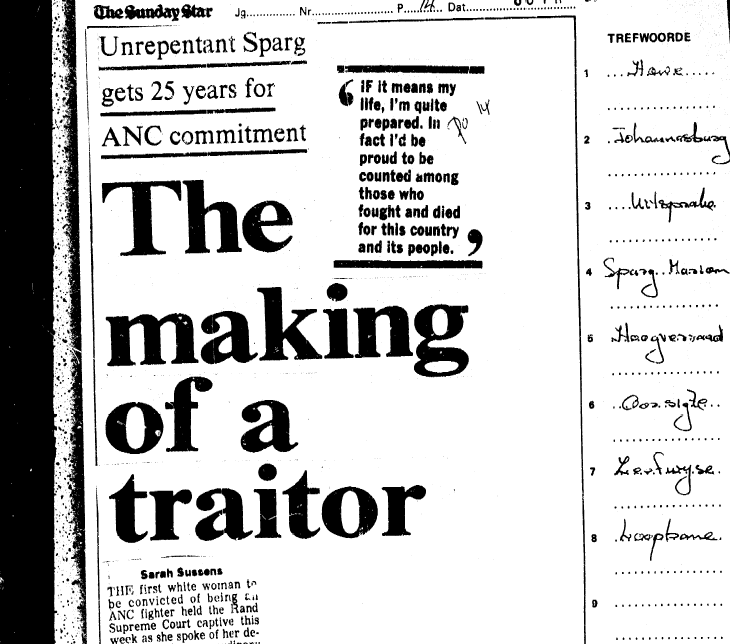
Police station operations, 1986, The making of a traitor, by Sarah Sussens, The Sunday Star, 9 November 1986
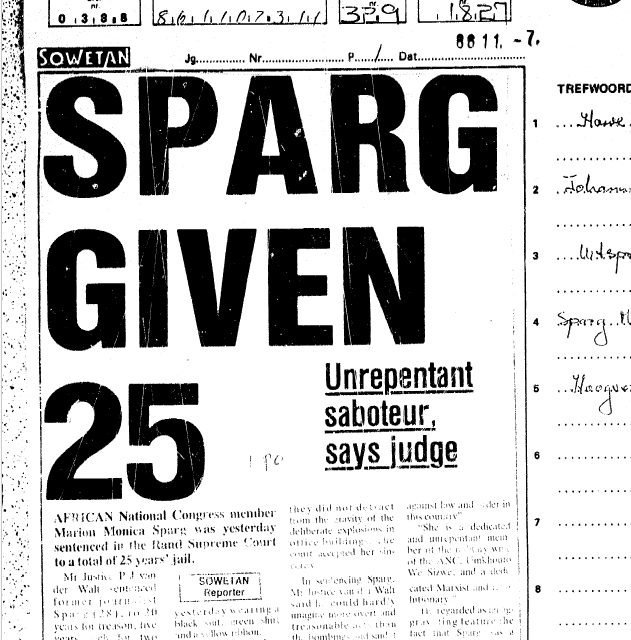
Police station operations, 1986, Sprag given 25, Sowetan, 7 November 1986
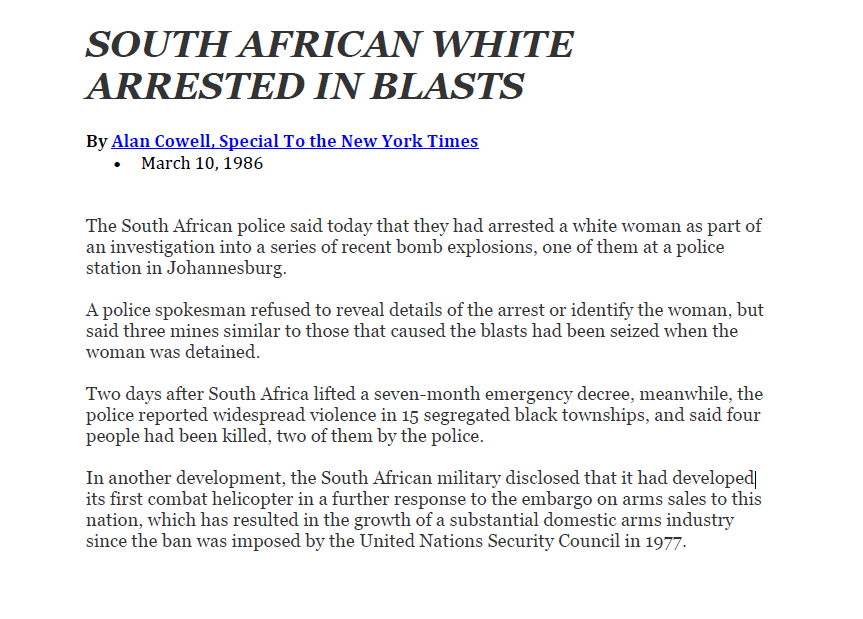
Police station operations, 1986, South African white arrested in blasts, by Alan Cowell, New York Times, 10 March 1986
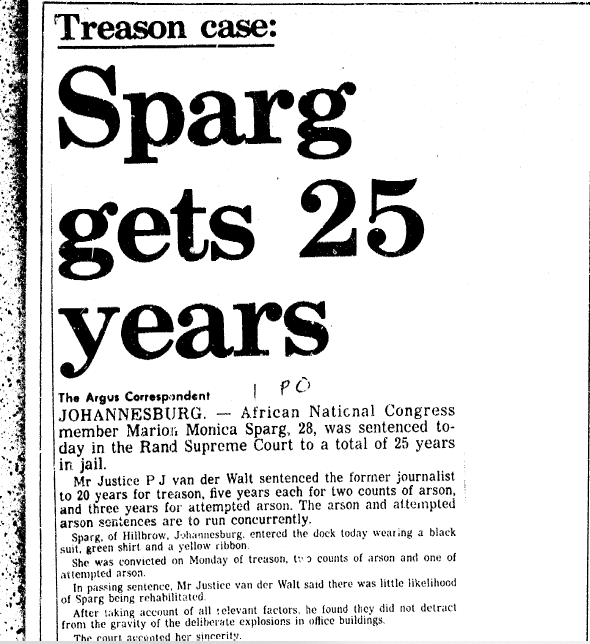
Police station operations, 1986, Sprag gets 25 years, Argus, 6 November 1986
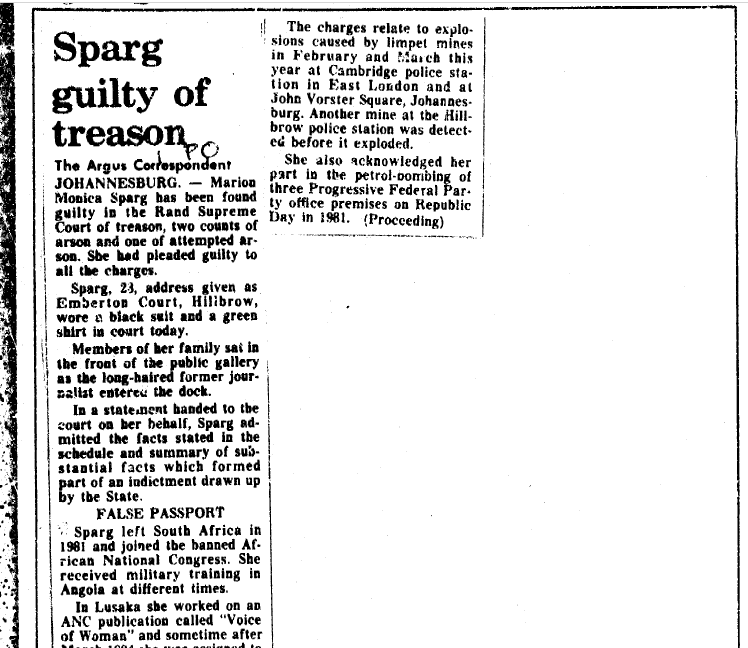
Police station operations, 1986, Sprag guilty of treason, Argus, 3 November 1986
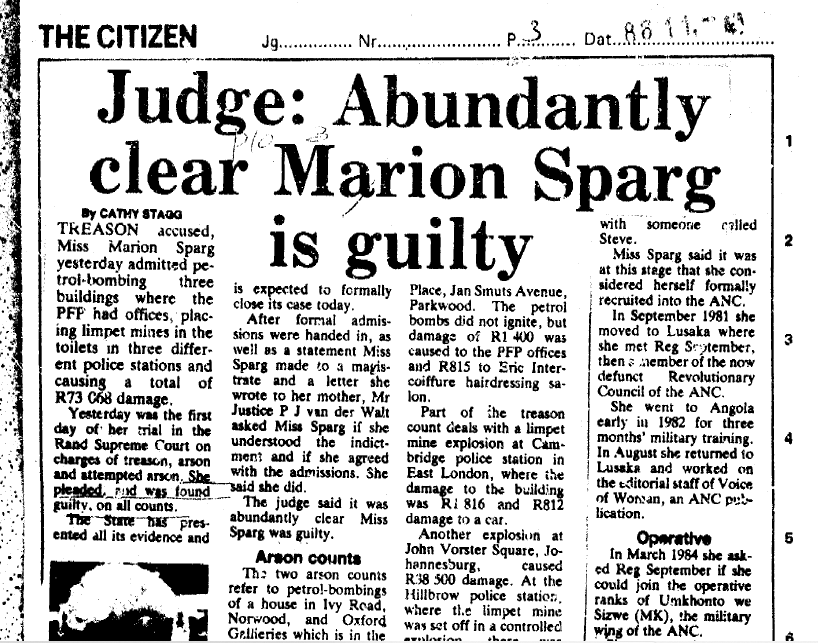
Police station operations, 1986, Judge: Abundantly clear Marion Sprag is guilty, Citizen, 4 November 1986
Cite This Page
Loading citations...
Share This Page
Facebook
Twitter
LinkedIn
Email