location: home | library | speeches | Vorster speech

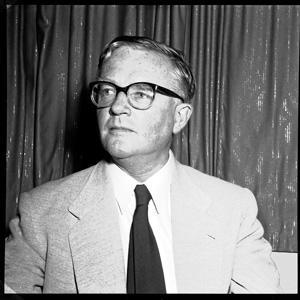
Lecture by the Honourable the Prime Minister at the first open Autumn School of the University of Stellenbosch in the H. B. Thorn Auditorium on 1 April 1975


On this occasion the Prime Minister shed light on the important calling South Africa has to fulfil in Africa. He sees the role of South Africa as that of a well-meaning friend who wants to assist by word and deed as far as he can. Adv. Vorster also referred to a few obstacles and problems which hamper South Africa's task in Africa. The attempt on South Africa has gained momentum since separate development has been established through skilful misuse of the word "apartheid", a successful campaign has been launched against South Africa. Adv. Vorster also referred in short to South Africa's important role in the world.

Mr. Rector, ladies and gentlemen

Thank you very much for the friendly words of welcome you have addressed to me on this occasion. As Chancellor of this University I was glad to accept this invitation, because I want to show my gratitude and appreciation towards this University for the new development you introduced, namely this Autumn School which you organised. I do not think there is one person who doubts that you are fulfilling a great need, and that the University of Stellenbosch is playing a special part in this respect. Mr. Rector, I want to congratulate you. Prof. De Vries and his Committee warmly on this initiative and I wish to express the hope and the belief that this will become a regular institution that will be attended by many in the years to come. I am convinced that as time passed everyone will look forward to participating. I believe it will not only be constructive and refreshing, but I believe that in this way you create an opportunity for people to relax and get together for a few days.

Now, Mister Rector, you instructed me to speak on the subject: The Republic's role in the New Africa. On this subject a lot of sense - and nonsense — has been written lately in almost every paper and magazine the world over. And the last word on that subject has most certainly not been spoken. It is therefore evident that the subject has been trod to dust, but that does not alter the fact that it is not only an interesting subject, but for us, as we are gathered here, and for everyone in South Africa, it is of absolutely fundamental interest because our future is indeed linked closely with it. And this we have to accept as such, whether we want to know it or not, whether we like to or not. And now we have the coincidence that while it is a very interesting topic at present, and while it is easy to philosophise about it, this topic is also, as far as South Africa is concerned and especially as far as I am concerned, as delicate a matter as you may find. You are aware that the Ministers of Foreign Affairs of the African states are gathering on April 7, i.e. - this coming Monday - in Dar-es-Salaam, for the very reason of discussing their stand on these and related matters 1. Anything a person says which can be twisted, may influence those talks. It is a fact that there are those in Africa who want dialogue with South Africa on this specific subject. And therefore any responsible person will be very careful in this respect. African leaders have met in the past to discuss matters and make decisions of far-reaching consequence.

I believe that this discussion which will take place before Africa makes decisions, will certainly be the most important that can take place in Africa. I say two stands can definitely be taken on this matter and Africa has to decide which it wants to adopt. I am glad that I can stand in front of you here tonight with the knowledge that what could be done by South Africa to show her goodwill, has indeed been done. Therefore, as far as I am concerned, I leave the decision to the leaders of Africa, knowing that if that decision is against South Africa, 2 then I at least have a clear conscience that what had to be done in Africa, has been done. A few questions immediately arise. And the first question is whether the Republic does indeed have a role to play in Africa. A minority group exists in Africa who believe that she should not. I believe that all right-minded people will agree with me that the Republic does in fact have a role to play in Africa. And if we answer positively to the question whether the Republic should play a part, then follows the question whether the Republic is able to play the part and also the question whether the Republic is willing to play such a part. If she is willing to play a part, then we have another question: What is that part? But before you can answer this question, you must first be in­formed of the obstacles and the problems lying in wait for you before you can play that part. Hindrances and problems, not only for the Republic, but also for the African states. To my mind, it is evident that we must play a role because we are an inseparable part of Africa; our cradle stood here and our grave will be here and our future will be decided in no other place but Africa. Therefore to ask whether we have a role to play in Africa is the same as asking France whether she has a role to play in Europe, Japan in the Far East or Egypt and Israel in the Middle East. The moment one encounters this problem one realises that one has a backlog to catch up with.

That backlog stems from and that historical problem makes interesting and fruitful aim material for discussion. But the fact is that for 160 years South Africa was part of first the British Empire and then the British Commonwealth and then the Commonwealth. Wittingly or unwittingly South African thought was centers on London from those early years and because we were part of that constellation we were swept along as part of that maelstrom. 3 For example, if we look back at the time many years ago when the British had problems with the present President of Botswana, Sir Seretse Khama, 4 the Republic almost automatically also had problems with him and it is a pity, looking back now, that South Africa's light, in connection with African affairs, had to be hidden under the proverbial bucket. Because if we had realised this a few generations ago, we could have played a much more decisive role than is the case today, in that South Africa has produced leaders of calibre in the past who could have made a positive contribution. Just in passing we think of General Hertzog's contribution with the Balfour declaration, 5 one thinks with gratitude of the contribution made by Dr. Malan concern­ing the Republics who wanted to stay in the Commonwealth. But once again, if we look at our development, it strikes us that at that time the emphasis fell on our identification with Europe, instead of already falling at that time, as it does now, on our inseparable links with Africa. I believe there is nobody present here who is more or less my age or older who cannot remember those unilingual days when one could see notices everywhere that read: "Europeans only". With colonial Africa we had more or less no connections or alliances; neither in its early history nor in its process of evolution nor in its rise against colonialism.

On the contrary, our attitude was unfortunately inclined towards an aloof antipathy and our knowledge consisted chiefly of stories about hunters and traders who penetrated into Darkest Africa now and then. But there was one point of light, namely the work done under very difficult circumstances by the missionaries of South Africa. And I want to tell you something here tonight. I have experienced this personally and have seen the Bible passage: "Cast your bread upon the waters and after many days you will find it", come true. That is, as far as South Africa's process of evolution and its relation with Africa is concerned. In turn the independent states of Africa attacked us, Rhodesia and Portugal in the spirit of Uhuru and the realisation of their united voice; they treated us all alike as the last colonialists in Africa; and in the UNO and its agencies as well as in world organisations we were accused of being oppressors and exploiters, even wholesale murderers 6 and slave drivers. Communists and White liberals co-operated lavishly. Rescue funds were founded and certain states, most probably propelled by a guilty conscience, took the front seats and certain other states who are completely ignorant of us and our circumstances shouted loudest. And South Africa was used as a scapegoat to divert attention from their own problems. Anybody who wanted applause, attacked South Africa and every paper in the whole world dished up its quota of news about South Africa and embellished it according to taste, while communist exiles, agitators and other adventurers lived on the fat of the land in the European capitals and collected funds from willing donors such as students on a rag day. I believe history will one day reveal the actions of these people as the greatest swindle practised on a gullible world. And you are aware that South Africa was not given a chance to defend her point of view, that she was refused participation in international agencies and finally the essence other membership of the UNO was assailed. 7

Nobody and no institution was spared in the vendetta against South Africa until even the status and prestige of the International Court was sacrificed and destroyed 8. The fact that South Africa lived in peace with its Black neighbouring states, that she was upholding a profitable custums union 9 with them and was aiding them in more than one respect, was to no avail at that stage. The fact that South Africa was not a menace to anybody and did not wish to attack anybody, was ignored - even her offer under those circumstances to sign a treaty of non-aggression 10, was rejected and President Banda was swept aside as the "odd man out" because he accepted South Africa's diplomatic hand of friendship 11. The call by President Houphouet-Boigny for dialogue with South Africa 12 fell was ignored and the fact that South Africa had placed the Black nations in her midst on the road to self-determination and would grant them independence if so requested, made no impression. There were those who believed that everything had to be done only with surrender and violence and one man, one vote was the only acceptable password in South Africa and the only solution for South Africa's problems.

While developments in the rest of Africa were passing us by, so to speak, because of historical circum­stances which I have referred to, we were thoroughly taking account of these developments and tendencies, thanks to the exceptional insight of the late Dr. Verwoerd. Not only did lie clinch the decisions on separate development and separate rights in his time, but the dated stipulation in our Constitution on the annexation of Botswana, Sway, Lesotho as the so-called protectorates was put aside, and the principle of diplomatic relations on an equal basis, which were already proposed by Dr. Malan and Adv. Strijdom, was acknowledged and put into practice by me in 1967 13. That led in turn to my visit to Malawi in 1970 14 and the mutual official visits by President Banda and President Fouche later on 15. One Black nation after the other accepted self-government and received it and at the moment the forerunner, Transkei, which was led from the beginning by Chief Kaizer Matanzima, stands on the eve of independence 16. And may I say on tills occasion, Mr. Rector, that the merit of this leader of the Xhosa has not been rated satisfactorily. I believe history will allot him a special place because he has led his nation step by step along the road of self-determination in spite of enormous pressure and humiliation and while being branded as a stooge. If you analyse the attack on South Africa since the fifties it becomes evident that it has grown in vehemence in proportion to the unfolding of the policy of separate freedom. Through skilful misuse; I repeat, through skilful misuse of the word "apartheid", which was adopted straight into all the world's languages without as much as an explanation of its meaning, an almost successful campaign was fought against the Republic for many years.

The fierceness of the campaign was eclipsed only by its cunning. To discredit South Africa that word was always mentioned. Just to give you an example of how people were indoctrinated in this respect, I refer to an article which was published in the Cape Argus on March 24 of this year and deals with the case of a Non-White who qualified in South Africa as a weight lifter, who has already reached the top of the ladder in South Africa and who then set out for Britain to become more famous and on whom the Queen finally awarded the MBE. This man has lately written a book and in the review of this book, the following is said (by chance the man's name is Precious McKenzie). The heading of the article is "Precious little about apartheid" and what is the article all about? Not in the first place what this man has to say about his achievements, but the reviewer does not hide the fact that he is angry and the reason is the following:

"The book contains no quotes from Precious on the evils of apartheid." You see therefore the extent of the indoctrination. This man who grew up here, who matured here, has nothing derogatory to say about South Africa and especially nothing to say about apartheid and he is blamed for not doing it. In my opinion it is highly significant that South Africa survived this onslaught of pressure and propaganda. The fact that she could grow and thrive in spite of boycotts and isolation is a glowing testimony of the resourcefulness of her people. This brings to light the ingenuity of South Africa's scientists, the integrity of her businessmen, the standards of her sportsmen, the perseverance of her officials, the quality of her products, the steadfastness of her people, the faith of her leaders and last but not least, the mercy granted her to keep going. With trowel and sword, so to speak, she managed to keep going, explained her viewpoint, developed and unfolded her policy, exposed the double standards, 17 strengthened her economy and her defensibility, showed up the debauchery and futility of the UNO's decisions, and made it evident that she was not only part of Africa, but was ready to fulfil her vocation in Africa. Let us pause for a moment to take stock and assess South Africa's position in the world today. Now I want to tell you straight away that it would be a mistake to pre­tend that our problems have almost come to an end, or that they are almost solved. On the contrary, I want to tell you frankly that the biggest struggle uphill is still to come. We have to take that into account and we shall indeed err if we do not. On the other hand it is certain that the majority in the UNO overplayed their hand in their action against South Africa and Israel at the end of last year 18. And in this respect it is relevant to quote what the Ambassador of the United States to the UNO said on 6 December 1974: "The General Assembly fulfils its function when it reconciles opposing views and seeks to bridge the differences amongst its member states. The most meaningful test of whether the Assembly has succeeded in this task is not whether a majority can be mobilized behind any single draft resolution, but whether those states whose co-operation is vital to implement a decision will support it in fact. A better world can only be constructed on negotiation and compromise, not on confrontation which inevitably sows the seeds of new conflicts. In the words of our Charter, the United Nations is to be a centre for harmonizing the actions of nations in the attainment of these common ends. No observer should be misled by the coincidental similarities between the General Assembly and a legislature. A legislature passes laws. The General Assembly passes resolutions, which are in most cases advisory in nature. These resolutions are sometimes adopted by Assembly majorities which represent only a small fraction of the people of the world, its wealth, or its territory. Sometimes they brutally disregard the sensitivity of the minority." And then he continued: "My countrymen have made a great investment in this world organization over the years – as host country, as the leading financial contributor, and as a conscientious participant in its debates and negotiations and operational programs. Americans have loyally continued these efforts in a spirit of good faith and tolerance, knowing that there would be words spoken which we did not always like and resolutions adopted which we could not always support. As the 29th General Assembly draws to a close, however, many Americans are questioning their belief in the United Nations. They are deeply disturbed. During this 29th General Assembly, resolutions have been passed which uncritically endorse the most far-reaching claims of one side in dangerous international disputes. With this has come a sharply increased tendency in this Assembly to disregard its normal procedures to benefit the side which enjoys the favour of the majority, and to silence, and even exclude, the representatives of member states whose policies the majority condemns. In the wake of some of the examples of this Assembly, the general conference of UNESCO 19 has strayed down the same path with the predictable concequences of adverse reaction against the United Nations. Innocent bystanders such as UNICEF 20 already have been affected. We are all aware that true compromise is difficult and time-consuming, while bloc voting is fast and easy. But real progress on contentious issues must be earned. Paper triumphs are, in the end, expensive even for the victors. The cost is borne, first of all, by the United Nations as an institution, and, in the end, by all of us. Our achievements cannot be measured on paper."

Coming from the United States at that particular moment these are words the world and Africa should take cognisance of. I have notices that the disgust which emenates from these words is gaining ground and I have reason to believe that the message they contain has hit home.

But in the first place it is a fact that the world's monetary crisis is slowly but surely influencing this matter in various ways. In the first place, money is no longer as easily available for each and every anti-South African organisation. In the second place unlimited aid for development, easy loans and donations are being restricted. In the third place the economic realities cannot be ignored much longer and they make it necessary for durable and essential products to be bought from the nearest and cheapest market. And this in turn forces certain countries to take another hard look at their priorities. The Nkrumah dream 21 of a great all-embracing unity is slowly fading and the question is put more and more often whether a friend who is near may not be better than a brother who is far. Economic development and provision of employment is only possible in an atmosphere of political stability, order and security for life and belongings. In this respect too an attack launched with total vehemence by Britain and her House of Commons is starting to boomerang. South Africa, so the world was told, pays her Black industrial workers too little and the refrain was taken up by leftists in the Netherlands and do-gooders in the United States and others joined in. And so naturally the World Labour Organisation had to inquire into the matter with the following results: With regard to industrial wages, the average pay in Egypt for 1973 was R15, in Mauritius R17, in Morocco R24, Sierra Leone R32, Ghana R45 and according to the Organizations' own findings, R71 in South Africa 22. And the workers of those countries have become aware of this and it is understandable that they in turn would ask rather to be treated in the "horrible" South African way. And of course that causes problems for many countries. Especially if one notes that the Black industrial wages in South Africa according to that calculation are assessed at 19% of the White wages, while in Zambia they are calculated to be only 14%. Naturally this does not apply to the same kind of labour, which accounts for the difference, but while we are on this subject it is interesting to note that while the government departments of the USA demand that American businesses in South Africa pay their workers a minimum wage of 140 dollars, there are 24 million Americans according to the USA's own cencus bureau, who earn less than that. This in turn causes problems in the USA. The demand to be made equal at least with bad South Africa, is growing and it will take its toll, especially if medical and other services as well as the cost of living are taken into considera­tion. But furthermore no developing country can manage without capital for investment. And investors are looking for a climate of free economy without the fear of nationalisation, they are looking for politi­cal stability and continuity - and continuity is always a problem in a one-party state. In this respect it is interesting to see what the Business Environment Risk Index, established years ago by Prof. Hainer of America and which is accepted by big companies and investors, has to say on the matter. They considered 43 countries. Countries in North America, South America, the East, Asia, Europe and were allotted marks with regard to their business risk.

Full marks was 100, and naturally this American institution awarded America the highest marks namely 81,4%. Canada was also rated highly with 78 %, Japan with 80,9 % and then follows India with 36,8%. Pakistan with 30,7%, Denmark with 72%, Italy 58%, West Germany 75%, the United Kingdom 66%, Kenya 47%, Libya 39%, Morocco 44 %, Nigeria 46 %, and this man who is not in the least biased in favour of South Africa, still awarded South Africa 77 marks - which is eighth position in the world, according to his standards. All these things are having an accumulative effect and not only is the application of double standards becoming more and more transparent, but South Africa's voice is being heard more often and will be heard more often. "The Voice of Reason", President Kaunda 23 called it and tills met with wide response. You do not have to look far for the reasons; the novelty of throwing mud at South Africa has become outdated as time passed. A Black man of Africa said that a voice of reason was coming from South Africa and that was enough for most people the world over.

It amuses me sometimes to see that old stands of South Africa are now being accepted - although somewhat reluctantly - and described as new policy. While on tour I came across many examples. A leader in Africa asked me to give him a short survey of South Africa's policy concerning South West Africa. I anticipated the question and therefore I had it with me in writing and I could give it to him as the South African viewpoint. After he had read through it he immediately told me that he could see nothing wrong with it and if that was the case he could fully agree with the new South African policy. I had to point out to him that it was not a new policy and gave him the South West African Survey of 1967 from which I had quoted. But you must not blame him, because this just goes to show how difficult it is to drive home the truth and what a wall of prejudice one has to penetrate, a wall of prejudice which is so strong that one cannot break through it with the written word or with a book: one has to go in person to do it effectively. And I say you must not blame this leader for his view, because the following was written in the USA. News Digest of the United States Information Service of 18 December 1974 of the Assistant Secretary of State for African Affairs of the USA, Mr. Donald B. Easum: "Assistant Secretary of State for African Affairs Donald B. Easum, in his recent address at the University of Kentucky in Lexington, said the US is "heartened" by recent public indications that the South African Government is willing to accept the principle of self-determination in Namibia." A principle which was already put into writing in 1967 in such a way that nobody could misinterpret it. It continues, "Secretary Easum was referring specifically to recent affirmations by the South African Government that the future of Namibia will be decided by the poeple of Namibia themselves." With us this viewpoint has grown beard, so many times have I repeated it myself. "That all options including independence are open to them and that the exercise of self-determination may come 'considerably sooner' than the ten-year prediction made by the South African Government in 1973".

In the fifth place, the true unfolding of South Africa's policy of separate development, the chances and opportunities it creates for Blacks and people of other colours are becoming more evident and are therefore impressing people.

The former accusation that we do not intend granting the Black Homelands independence has now become a cry of distress in leftist circles, an accusation that we really mean it. And you will hear the charge being repeated more and more as the Transkei progresses in that direction 24. This is because the realisation is growing in hostile circles that if this aspect of our policy is put into practice and succeeds, it will destroy to a great extent the arguments that can be used against South Africa.

But in the sixth place, it remains a fact that the South African economic power as projected against Africa is starting to impress people and although South Africa represents not more than 5 or 6 % of Africa as far as area and population are concerned, she is responsible for close on 40 % of all production in Africa. The fact that the South African budget equals the joint budget of the 20 most important states in Africa, including Kenya, Zambia, Tanzania, Zaire, Ghana, the Ivory Coast and Nigeria, has not escaped attention. In this respect it is also interesting that according to the latest data the joint budgets of Egypt and South Africa equal those of all the remaining African countries, including even those who have oil at their disposal. In the seventh place South Africa guards the Cape sea route. Seen from any angle whatsoever, it is and remains the artery of the free world and to a great extent the supply line of Africa herself. Furthermore as an African state, South Africa has expressed willingness to share Africa's lot 25. She has the knowledge and experience of Africa's conditions, other needs and everything that entails. She is therefore excellently disposed and probably better than most if not all countries, to help Africa to help herself, but without, and I repeat without tying Africa politically or economically to herself or putting her under any obligation, because South Africa is only seeking normalisation of relations, for her own benefit, that is true, but also and above all for the benefit of the rest of Africa. To reach this goal we have lately entered into agreements with countries in North Africa and since October continuous talks have been under way with states in Southern Africa, and we have already made more progress than I would have believed possible in September, October or November last year. And I can tell you confidently here tonight, in spite of the differences which exist - and there are many of them and they are not going to disappear overnight - in spite of those differences I found some African states willing to continue the dialogue with South Africa and to normalise relations, if only they would be permitted to do so. But I am very thankful for one thing tonight, and that is that I can tell you that in spite of all the differences and in spite of what has been said in the past, I found that Africa respects South Africa. In October last year when I discussed this matter in the Senate, 26 I thought I was right to appeal to Southern Africa to choose between co-operation and progress on the one hand or an escalation of violence and confrontation on the one hand. And I still believe today and it is clear now - I am for thankful - that I mentioned this at the correct psychological moment. Africa knows that my appeal was not made out of fear or weakness; Africa also knows that we are not keeping a back door open or acting under any other pretext. Africa knows we covet nothing which belongs to her, she knows we do not want to force ourselves upon her, and as far as those countries are concerned who say that they will not receive us, the fact is that I have not asked to be received. Africa also knows that we are extending the hand of friendship just as we are and I am thankful to know that Africa is aware also as far as I am concerned, that I do not tell them one story while telling another at home. Africa is aware that we have a part to play in Africa, that we cannot simply be ignored. But not only is she aware that we must play a part, she knows that we can indeed do it although she may not want to acknowledge it today or tomorrow. For generations we in Africa took no notice of one another, ignored one another and fought a battle of words. Today we both know that there is another road, the road of peace, and that for Africa's sake we must follow that road. There have been setbacks and as a realist one should expect setbacks, perhaps even very serious setbacks. As I have mentioned, these things are delicate, very delicate and it is better for Africa's cause, not even to discuss them. She has important decisions to make, decisions that are not waiting in the distant future, but present-day decisions.

There is still mutual strife in African countries and this has to spend itself or find some other solution. This may cause, as I have said, most of the bridges built lately to be destroyed again, but some will remain and even if it does happen that these bridges are broken, then I believe irrevocably that it will only be temporary, because finally realism must triumph and the parties will have to talk to one another in order to normalise relations in Africa. And if you ask me what my prediction is, then I say that I predict politically independent states who co-operate closely economically; politically independent countries who rely upon one another technically; politically independent states who support one another without prescribing to one another and with­out interfering in one another's internal affairs. And as far as South Africa is concerned and Southern Africa of which we are a part, I still predict that the economic power bloc which I mentioned about two years ago in the House of Assembly, will come into existence. 27 The interests of Southern Africa and her states will see to it. South Africa has a role to play in Africa; she must play it. That role will always have to be that of a well-meaning friend who wants to assist by word and deed as far as he can. A friend who has knowledge and experience of matters in Africa, but also a friend who was the first of all the African states who threw off the yoke of colonialism. I believe all the things I have mentioned here, whether they come to pass today or tomorrow; I believe that it is a historical inevitability that South Africa will play a part in Africa. What is more, I believe South Africa is destined to play that part and as a believer I accept that South Africa cannot escape it, because it is her calling in Africa.


1 A special session of the Council of Ministers of the Organisation of African Unity (OAU) was held in Dar-es-Salaam during April 1975. Representatives of four of the Organi­sation's member states attended the session. Cf. Keesings Contemporary Archives, 1975, p. 27115 et seq. On 18 April 1975 the Prime Minister referred in the House to the meeting in Dar-es-Salaam. Cf. Assembly Debates, Part X, 14-18 April 1975, col. 4374 et seq.

2 Cf. the Prime Minister's speech in the House of Assembly on 18.4.1975.

3 London was also the Union's diplomatic channel, because the Union and the dominions were not sovereign states. The Union therefore could not follow an independent foreign policy. Britain acted for the whole Empire in the international world. Cf. F. A. van Jaarsveld, Van Riebeeck tot Vorster, 1652-1974, Johannesburg, 1976, p. 324 et seq.

4 In 1948 Seretse Khama married a White English girl, Ruth Williams. This marriage caused great dispute about the person of Seretse Khama. Cf. S. M. Gabashwane Khama and Botswana. Kanye, J. G. Mmusi and S. M. Gabatshwane, 1966, p. 8 et seg See also Great Britain, Commonwealth Relations Office, Bechuanaland Protectorate: Success to the Chieftainship of the Bamangwato Tribe, London, Her Majesty's Stationery1950, p. I et seq.

5 This declaration defined the constitutional relation between the dominions as "autonomous communities within the British Empire, which are equal in status, not one of them inferior to the other in any aspect of their internal or external affairs allied to the Throne by their common allegiance and united freely as men British Commonwealth of Nations". The Union's sovereign independence was a. lodged by this declaration. This is exactly what Gen. J. B. M. Hertzog had been is for. Cf. F. A. van Jaarsveld, op. cit., p. 330 et seq.

6 The slander about the so-called wholesale murder in Caprivi in August 1974 revealed the world's prejudice against South Africa. Cf. The Cape Argus, 20.8.1974; The Star, 20.8.1974; Die Suidwester, 20.8.1974.

7 On 12 November 1974 the General Assembly ruled that South Africa could no attend sessions of the Assembly, could not participate in the Assembly's or its committees and that she could not vote. Cf. Hoofstad, 13.11.1974. South Africa retaliated immediately by announcing that she would not pay her yearly contribution which amounts to more than I million dollars (more or less R700 000). Adv. Pik Botha, South Africa's Ambassador to the UNO, was also recalled to South Africa for discussion with the Prime Minister. Cf. Die Volksblad, 13.11.1974; Pretoria News, 13.11.1974; The Daily News, 13.11.1974; The Star, 13.11.1974.

8 Cf. in this connection the advisory opinion of the International Court in 1971 concerning the dispute about South West Africa. After the advisory opinion was announced on 21 June 1971, the South African Prime Minister, Adv. B. J. Vorster said: "It is however already clear that the argument of the Court will not stand up to the test of juridical analysis and that all too familiar double standards are evident in the latest opinion." Cf. A. Lejeune, comp., The Case of South West Africa, London, 1971, p. 13 et seq. and p. 187 et seq. J. Dugard, The South West African Namibia Dispute, Berkeley and Los Angeles, 1973 P- 447 et seq.

9 In 1910 a customs agreement was signed between South Africa, Basutuland Bechuanaland (Botswana) and Swaziland. Cf. Government Gazette, 2.8.1910, (Government Notice No. 274). Slight changes have been made in 1911, 1913 and 1946, as quoted by M. C. Eksteen, Lesotho in Uitwaartse Beweging. Johannesburg, 1972,p.110 On 9 November 1967 South Africa, Lesotho, Botswana and Swaziland met in Pretoria to discuss the 1910 agreement, Cf. The Star, 9.11.1967; Die Burger, 9.11.1967 and 10.11.1967. Further talks took place in Pretoria on 23 July 1968.

10 Cf. the Prime Minister's speech in the House of Assembly on 15 September 1970.

11 In December 1967 formal diplomatic relations were established between South Africa and Malawi. Cf. M. Horrell, comp., A Survey of Race Relations in South Africa, Johannesburg, 1968, p. 82 and S. C. Nolutshungu, South Africa in Africa. A Study of Ideology and Foreign Polity, Manchester, 1975, p. 197.

12 In November 1970 President Houphouet-Boigny of the Ivory Coast delivered a pica for dialogue with South Africa. He said amongst other things: "We will not achieve the solution to the problem of apartheid in South Africa by resorting to force of arms. We wish to open talks with this country." Cf. Africa. An International Business, Economic and Political Monthly, No. 2, 1971.

13 Cf. foot-note 11.

14 In May 1970 Adv. Vorster visited Malawi and met President Hastings Banda. Cf. Die Volksblad, 19.5.1970; The Star, 21.5.1970.

15 In August 1971 President Banda visited South Africa and met both the State President, Mr. J.J. Fouche, and the Prime Minister, Adv. B.J. Vorster. In March 1972 Mr. Fouche visited Malawi. Cf. Die Volksblad, 16.8.1971 and 19.8.1971.

16 On October 1976 Transkei, one of South Africa's nine Black homelands, became an independent Republic.

17 Cf. also the Prime Minister's speech at a report-back meeting in his constituency, Nigel, on 5 November 1974.

18 See foot-note 8. Cf. Keesing's Contemporary Archives, 1974, p. 26861 et seq.

19 UNESCO - United Nations Education Scientific and Cultural Organisation.

20 United Nations Children's Fund.

21 From 1960 to 1966 Dr. Kwame Nkrumah was president of Ghana. Cf. S. Taylor, e., d., The New Africans, London, 1967, p. 177 el seq.

22 According to the Bureau for Market Research of the University of South Africa the per capita income of all Blacks in Johannesburg in T975 was R6a8. The average income of Black multiple households was R2 273,00 in 1975.

23 On 26 October 1974 President Kenneth Kaunda of Zambia responded to the speech made in the Senate by the South African Prime Minister, Adv. B. J. Vorster, on 23 October 1974. He described Adv. Vorster's speech as "the voice of reason which Africa and the rest of the world had been waiting for". Cf. Sunday Tribune, 27.10,1974; To the Point, 1.11.1974.

24 Cf. the Prime Minister's speech in the House of Assembly on 18 April 1975, col. 4461 et seq. See also To the Point, 7.11.1975.

25 South Africa has made a valuable contribution in Africa as a member of inter-African organisations such as CSA (Conseil Scientifique pour I'Afrique au sud du Sahara) and CCTA (Commission de Cogeration Technique en Afrique au sud du Sahara). Cf. F.J. H. Wessels, Die Republikeinse Grondwet, Cape Town, 1962, p. 175 et seq. See also F. A. van Jaarsveld, op. cit., p. 528 et seq. concerning help for Africa since Adv. B.J. Vorster became Prime Minister of South Africa on 13 September 1966.

26 Cf. The Prime Minister's speech in the Senate on 23 October 1974.

27 Cf. the Prime Minister's speech in the House of Assembly on 4 February 1974. See also N. Luyt, 'n Studie van Regionalisme in die wereldpolitiek met besondere aandag aan Suider-Afrika, Bloemfontein, 1969, pp. 119-68 and E. Rhoodie, The Third Africa, Cape Town, 1968.

BACK TO INDEX PAGE