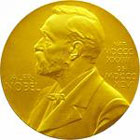
Alfred Nobel

Names: Nobel, Alfred

Born: 21 October 1833, Stockholm, Sweden

Died: 10 December 1896, San Remo, Italy

In summary: Swedish chemist, engineer, industrialist and inventor of dynamite 

Alfred Nobel was born in Stockholm, Sweden on 21 October 1833. he was the third son of Emanuel Nobel and a descendant of Olof Rudbeck, the most famous Swedish technical scholar from the 17th century.

Nobel and his family moved to St. Petersburg in Russia when he was still young.

His father opened a torpedo factory and during this time university professors privately tutored young Alfred. Following the Crimean War, which lasted from 1854 to 1856, the Nobel family returned to Sweden.

The torpedo works had been left under the supervision of the eldest Nobel son, Ludvig, in 1859. He enlarged the factory, but the family business went bankrupt.

On his return to his homeland Alfred Nobel began studying explosives. He was interested in creating a controllable explosive that would make blasting rock and the building of canals and tunnels a safer procedure.

His focus was the use of nitroglycerin. He developed and patented a detonator that could detonate nitroglycerin by using a shock instead of heat. In 1864, during one of his experiments, his younger brother Emil and several employees were killed at a family-owned factory in Helenborg.

Despite this tragedy he opened his first factory for the manufacture of the dangerous chemical in 1865.

Nobel realised that nitroglycerin in a fluid state was extremely dangerous. This led him to develop dynamite, which consists of dynamite absorbed by a porous substance, in 1866. This invention provided a solid, but flexible explosive that could be easily handled. He eventually established companies and factories in more than 20 countries.

He was a very prolific inventor and held 355 patents in various countries in biology, electrochemistry, optics and physiology. He also helped invent artificial silk, synthetic leather and synthetic rubber.

Although he was an industrialist and chemist Nobel’s interests included literature and poetry. He wrote several novels and poems, and was also a playwright. He only wrote one play, called Nemesis, which was printed while he was dying.

Alfred Nobel passed away on 10 December 1896 from a cerebral haemorrhage in San Remo, Italy. He left a library of more than 1 500 books ranging from fiction to philosophy, but this was not the greatest gift that he left the world. He also willed the largest part of his massive fortune towards the creation of an international series of prizes we know as the Nobel Prizes. These prizes are awarded to people or groups that make important advancements and discoveries in the fields of Physics, Chemistry, Physiology or Medicine, Literature, and Peace. Receiving a Nobel Prize is one of the greatest honours in the world.

Alfred Nobel is interred in the Norra begravningsplatsen in Stockholm.

References