
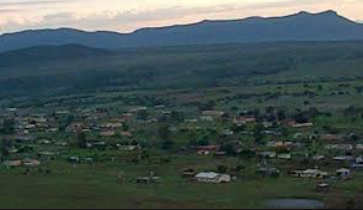
The Cape government established the settlement of Kamastone in the Queenstown area, in 1854. In 1874 the government received complaints from Black residents that squatters had taken up residency and it was decided that people who were living there had to be given titles of ownership to prove that they legitimately owned the land they were living on. The area was divided into 8 sub-locations, of which Bulhoek was one. Although the land was still the property of the British Crown it was surveyed into usable lots, building lots and a commonly owned area for the use of the people. The Bulhoek area was commonly owned and according to the Native Locations Act of 1884, was not to be used for building or squatting and was not allowed to be damaged. Enoch Mgijima, who was the leader of 500 followers, known as the 'Israelites', was one of the title holders at Bulhoek.
Preserved in a small glass case in the Amathole Museum in King William's Town, a homemade sword stands as the symbol of a religious group's struggle to preserve its community. The poorly made, jagged-edged sword was used by Israelites, today known as members of the Church of God and Saints of Christ, against policemen armed with machine guns in one of the bloodiest clashes in South Africa's history. More than 3 000 worshippers refused government orders to move off a piece of land in Ntabelanga, also known as Bulhoek, a holy village near Queenstown in Eastern Cape.
Led by their prophet, Enoch Mgijima, the worshippers were adamant that they would move only if God told them to do so. With sticks, spears and swords, the Israelites charged almost 1 000 armed policeman, who opened fire, killing more than 500 people on May 24 1921. Leaders of the church dispute the 163 death toll as cited in history records.