Skip to main content
South African
History Online
Politics & Society
Africa
Art & Culture
Biographies
Classroom
Places
Timelines
Archives
About Us
Cite This Page
Share
Print
Timeline Explorer
♥
Donate
South African History Online
Know your
history
Search SAHO
30,000+
Archive records
17,000+
Historical events
10,000+
Biographies
2,800+
Articles
Trending topics
Apartheid
Nelson Mandela
Freedom Charter
Sharpeville
Steve Biko
Anglo-Boer War
Mandela
Zulu
Browse by era
Pre-colonial
Colonial era
Apartheid era
Liberation struggle
Post-1994
World Wars
Explore by type
Politics & Society
Biographies
Timeline
Archives
Classroom
Recent searches
Menu
Politics & Society
Africa
Art & Culture
Biographies
Classroom
Places
Timelines
Archives
About Us
Home
SAHO Archive
Abstract
Abstract
Published 8 February 2012
Updated 18 June 2019
Cite This Page
Share
Related Content & Topics
Popular Content
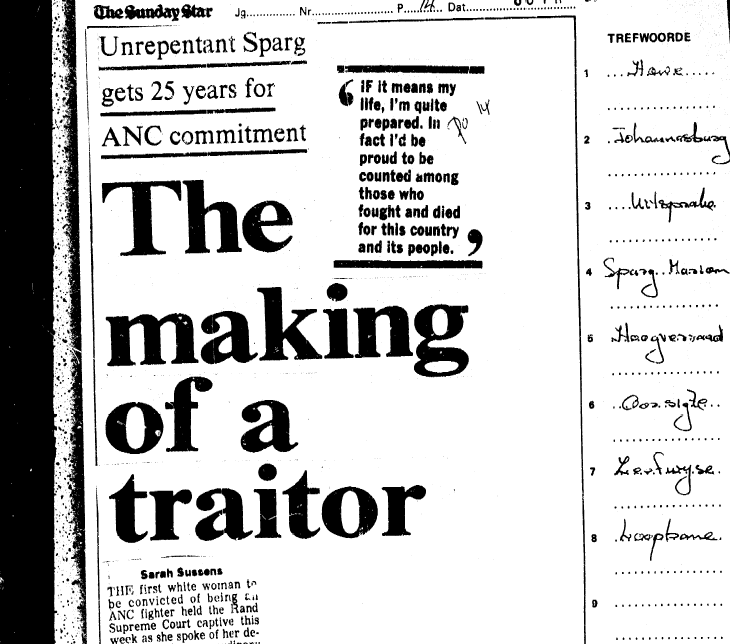
Police station operations, 1986, The making of a traitor, by Sarah Sussens, The Sunday Star, 9 November 1986
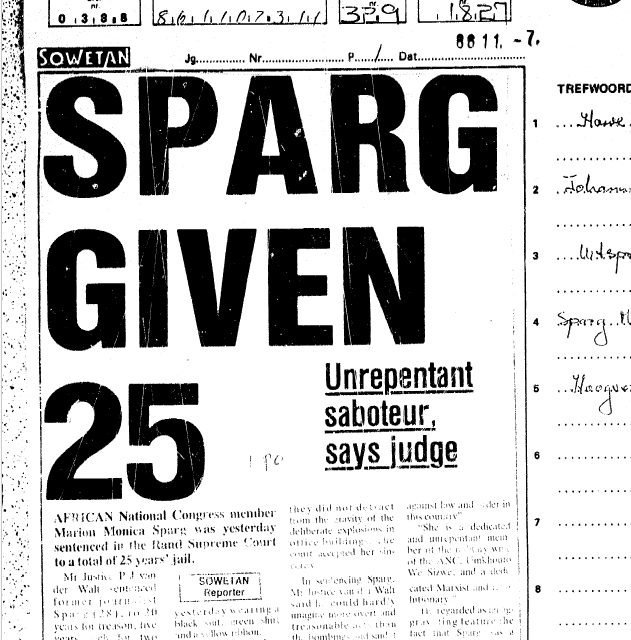
Police station operations, 1986, Sprag given 25, Sowetan, 7 November 1986
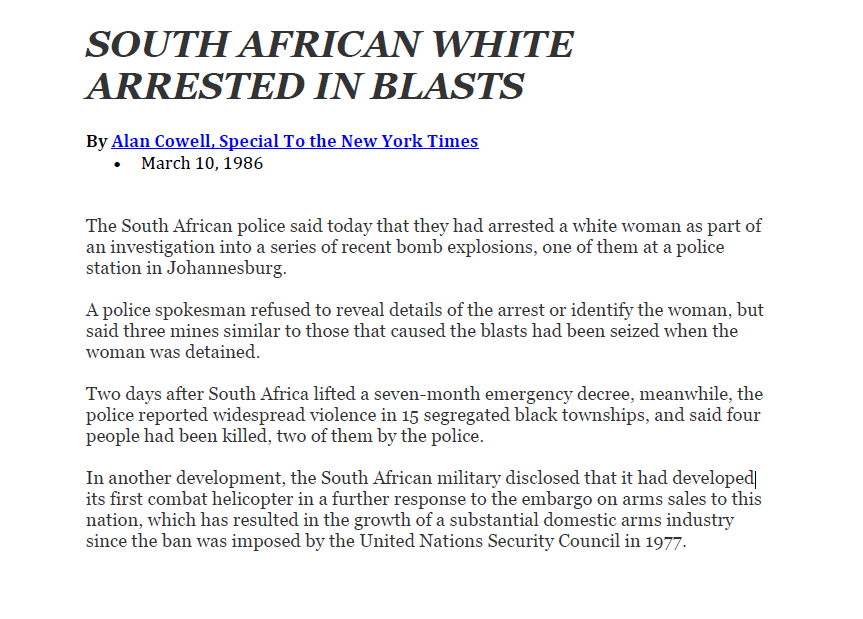
Police station operations, 1986, South African white arrested in blasts, by Alan Cowell, New York Times, 10 March 1986
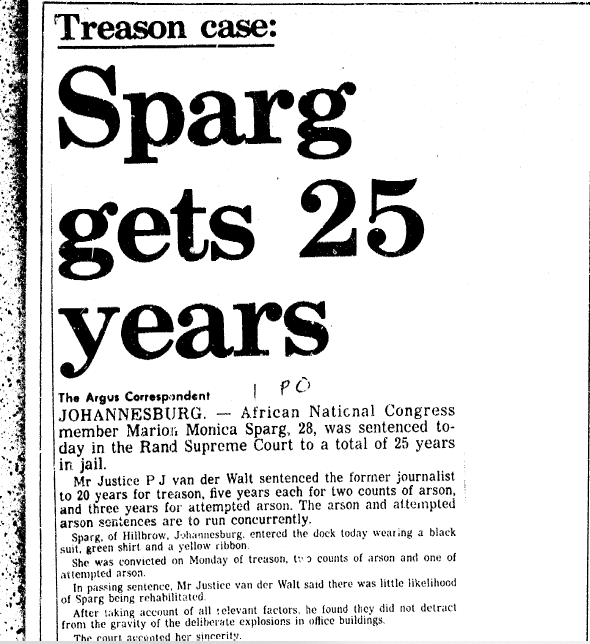
Police station operations, 1986, Sprag gets 25 years, Argus, 6 November 1986
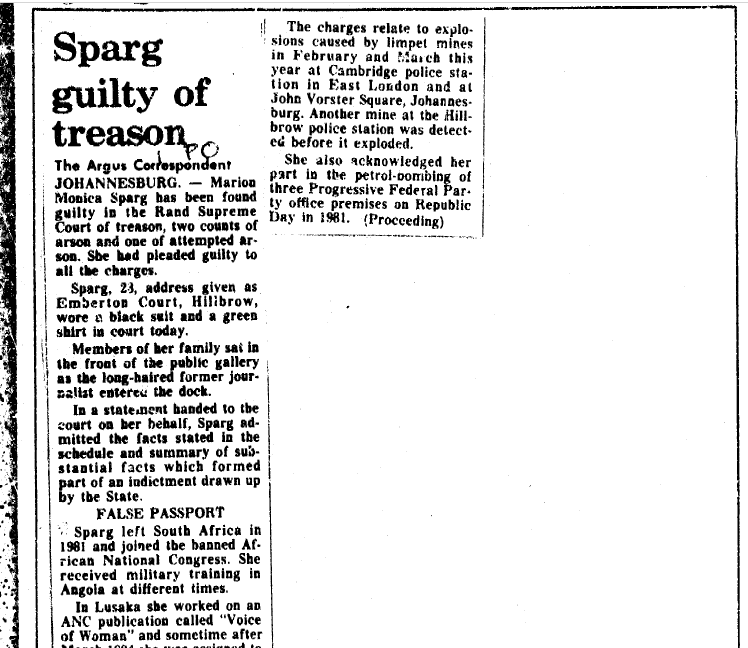
Police station operations, 1986, Sprag guilty of treason, Argus, 3 November 1986
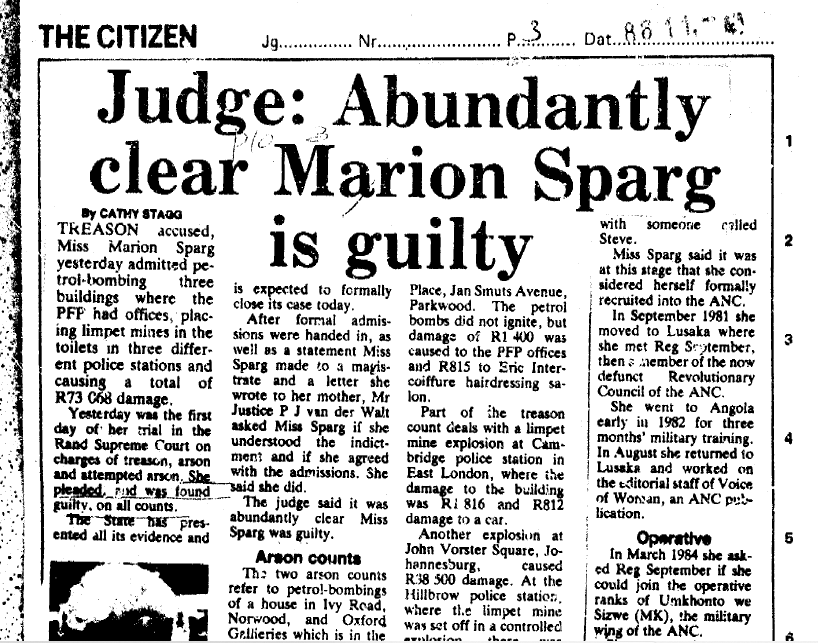
Police station operations, 1986, Judge: Abundantly clear Marion Sprag is guilty, Citizen, 4 November 1986
Cite This Page
Loading citations...
Share This Page
Facebook
Twitter
LinkedIn
Email