
SAHO global search
78 records
 Article
South African Constitution: The Bill of Rights
On 21 March, South Africa celebrates Human Rights Day. This day is a commemoration of the 1960 Sharpeville Massacre and how far the nation has come in the…
The National Flag
The national flag was designed by a former South African State Herald, Mr Fred Brownell, and was first used on 27 April 1994. The design and colours are a…
Historical Background of the Constitutional Court
The Constitutional Court was established in 1994 by South Africa's first democratic constitution - the interim constitution of 1993. The Court, the key…
 Article
The Founding of the Economic Freedom Fighters (EFF)
According to the EFF’s publication ‘The Coming Revolution’, Julius Malema had earned the title of Commander-in Chief of the Economic Freedom Fighters when he…
 Article
History Grade 10 - Topic 3 Source-based Questions
Based on the 2012 Grade 10 NSC Exemplar Paper: Grade 10 Past Exam Paper Grade 10 Source Addendum Grade 10 Past Exam Memo Level 1 & 2…
 Article
The National Coat of Arms
The role of a Coat of Arms A national coat of arms, or State emblem, is the highest visual symbol of the State. Take a minute to consider the important events…
 Article
African National Congress Timeline 2000 -2010
During this period the ANC consolidated its hold on power but also faced both internal and external challenges. Significantly, the National Party, which was…
 Article
The Drafting and Acceptance of the Constitution
On 2 February 1990, the National Party government unbanned political parties, released many political prisoners and detainees, and unbanned many people,…
 Article
African National Congress Timeline 1990-1999
During the 1990s, behind-the-scenes negotiations between the government and the ANC gathered pace. As part of that process, the ANC, PAC and other parties were…
 Article
The South African War 1899-1902
On 9 October 1899 the SAR issued an ultimatum to Britain and two days later, on 11 October the war was officially declared between Britain and the Boers. The…
 Article
Thabo Mbeki (1942 - ) Timeline
Historical Context to Thabo Mvuyelwa Mbeki 1932 Epainette Moerane (Ma Mofokeng Clan Name) Meets Govan Mbeki at Taylor Street Secondary School. 1935 …
 Article
South African Constitutional Development Timeline 1902 - 1997
1902 31 May, The Peace Treaty of Vereeniging ends the Anglo-Boer War that began in 1899. The Treaty is signed between Boer and British leaders. 1908 12…
 Article
African National Congress Timeline 1970-1979
By the 1970s a number of leading figures in the ANC were in prison while others were in exile. Those that remained inside South Africa faced arrest, detention…
 Article
The Interim South African Constitution 1993
On 13 November 1991, Nelson Mandela announced that the first constitutional talks would take place on 29 and 30 November at the World Trade Centre in Kempton…
 Article
Nelson Mandela Timeline 1990-1999
1990 2 February, President F. W. de Klerk makes a speech at the opening of Parliament, announcing the lifting of a 30-year ban on the ANC, the Pan African…
 Article
The Freedom Charter by Norman Levy
This article was taken from the book The Final Prize by Norman Levy (Chapter 10) Time for a Chartist Movement The idea of the Freedom Charter and the…
A brief history on South African prisons and prisoners
Introduction In 1948 the National government was voted into power and instituted apartheid. This lead to an increase in the number of people being…
 Article
Transition to Armed Struggle by Norman Levy
Transition to Armed Struggle The brief respite from the Treason Trial which ended on 29 March 1961 and the Rivonia arrests in July 1963 was a period of…
Biography of George Hallett by Hunter Kolon
George Hallett—More than Mandela Abstract George Hallett, a South African photographer is an artist who spent several decades living in exile. He left the…
 Article
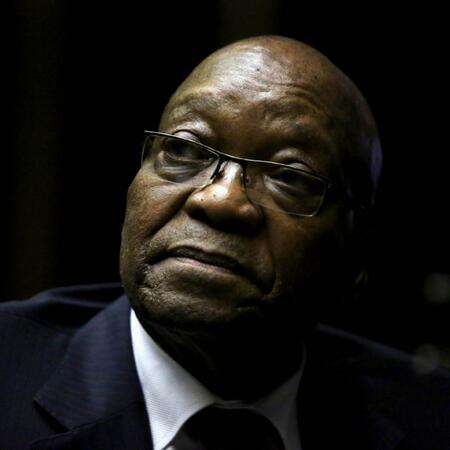
A timeline of Zuma-Gupta issues from Nenegate to the firing of Pravin Gordhan
1993 The Guptas arrive in SA. 1994 The Guptas establish Sahara Computers. The Guptas fund Essop Pahad’s publication, The Thinker. 2002 Jacob…
 Article
South Africa’s Academic and Cultural Boycott
Introduction In 1948 with the election of the National Party and the enforcement of an Apartheid State, it took time for the world to take notice and action…
 Article
Yusuf Dadoo Timeline: 1940-1949
Yusuf Dadoo Timeline: 1940 - 1949 1940 Within a year of his joining the Communist Party of South Africa (CPSA), Dr Yusuf Dadoo's role as an activist in…
 Article
Timeline 20 years of Democracy 1994 to 2014
1994 27 April,South Africa's interim constitution which was adopted in November 1993 came into effect on 27th April 1994 to administer South Africa’s first…
 Article
African National Congress Timeline 1980-1989
The 1980s witnessed an increase in attacks launched by the ANC through its armed MK inside South Africa. Conversely, the government responded by stepping up…
 Article
Mangosuthu Buthelezi: the Zulu nationalist who left his mark on South Africa’s history
Mangosuthu Gatsha Buthelezi played a prominent role in South African politics for almost half a century. He was one of the last of a generation of black South…
 Article
The 1956 Women’s March in Pretoria
The 1956 Women’s March in Pretoria, South Africa constitutes an especially noteworthy moment in women’s history. On 9 August 1956, thousands of South Africa…
Biography of Heinz Klug by Ashley Rogers
ABSTRACT Heinz Klug is a white man born in South Africa who vehemently fought apartheid from both within South Africa and outside in exile. Klug believed that…
 Article
African National Congress Timeline 1960-1969
This period began with the intensification of the anti-pass campaign, which resulted in the banning of the ANC and the PAC following the Sharpeville Massacre…
 Article
A History of Official Government HIV/AIDS Policy in South Africa
The HIV/AIDS Crisis Emerges: Reponses of the Apartheid GovernmentIn 1982, the first case of AIDS in South Africa was reported in a homosexual man who…
 Article
General South African History Timeline: 1990s
1990 Nelson Mandela is released from prison. 27 townships declared unrest areas in terms of the Public Safety Act No 3 of 1953. Gazankulu: Immorality and…