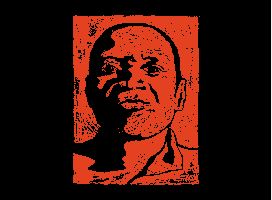
Lionel “Rusty” Bernstein was born on 20th of March in 1920 Durban, Natal (now KwaZulu-Natal) of European Jewish immigrants. He was the youngest of four children. Orphaned at twelve years, he was brought up by relatives. He was educated at Hilton College in Natal. After matriculating, he returned to Johannesburg where he started work at an architect’s office, while studying architecture part-time at the University of the Witwatersrand. After qualifying in 1936, he worked full-time as an architect from 1937 to 1941.he later became partner in a well-established architectural firm.Bernstein interest in politics began in high school,after graduating he joined several leftist groups including Labour League of Youth (LLY) thats where he met Hilda Watts.After that they both joined the Communist Party of South Africa (CPSA) and both got elected as Distric Committee in 1941.
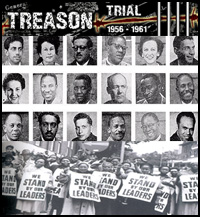
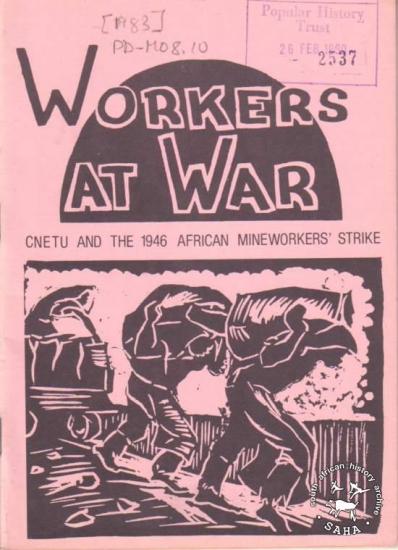
In 1942 Bernstein enrol in the South Africa artillery and served in Italy during World War Two.In 1946 he was among those charged with sedition following the 1946 mineworkers strike. In 1948 he became a member of both its national executive committee and the editorial board of Fighting Talk, its official jornal.The jornal became indepedent in 1953, he remained its editor until 1955.he also played a role in crafting the Freedom Charter in 1955.In 1956 to 1961 he was in treason trial until charges were dropped against him in 1958.In 1960 he was detained without charge for almost five months during the post-Sharpville state of emergency.In 1987 he lectured at the Lenin School in Moscow and in 1988 to 1989 spent time at the Solomon Mahlangu College in Tanzania.In 1994 he returned to South Africa for Nelson Mandela inauguration as president and then return to Britain until his death.In 1999 he published an autobiography,Memory Against Forgetting.