FEATURE: Speeches & further biographical details SAHO's BIOGRAPHY PICTURE GALLERY

SAY IT OUT LOUD - The AP0 Presidential Addresses and other Major Political Speeches 1906 - 1940
of
DR ABDULLAH ABDURAHMAN
COLLECTED, EDITED AND WITH A BIOGRAPHICAL INTRODUCTION
by
R.E. VAN DER ROSS
The Western Cape Institute for Historical Research (IHR)
University of the Western Cape, Bellville, 1990

FOREWORDBIOGRAPHICAL INTRODUCTION PRESIDENTIAL ADDRESSES TO THE AFRICAN PEOPLE'S ORGANISATION
THE DEATH OF DR ABDURAHMAN

BIOGRAPHICAL INTRODUCTION

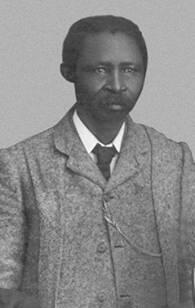
Abdullah Abdurahman was born in Wellington, near Cape Town, on 18th December1870, probably in that part of the town called " Verlatekloof " . His grandparents were according to Lady Duff Gordon's Letters from the Cape both former slaves, but they must have been remarkable people, for the grandfather, Abdul Jamalee (from the Oriental Jamal-ud-din) purchased his freedom from slavery, and that of his wife Betsy. They then established and ran a successful business at the corner of Roeland and Hope Streets, Cape Town. It was probably a converted dwelling house, and above the door, painted on the back of a tin tray, was the name: "Betsy, Fruiterer." It is said that at one time Abdul Jamalee had assets worth more than five thousand pounds. This would, in today's terms (1989) and currency, be worth about four hundred thousand rand (R400 000,00).

Their son, Abdul Rahman, Abdullah's father, studied theology at Al Azhar University in Cairo, one of the most prestigious centres of learning in the Arab world, and in Mecca. On his return, he married the beautiful Khadija Dollie, the family name Dollie being a derivative of Abdullah. As far as can be established, Abdul Rahman and his wife Khadija had five children. Besides Abdullah, there were two sons: Ismail, who also became a medical doctor, and Ibrahim, who became a pharmacist, both of whom practised in Cape Town. Another daughter married Mr. Patel, who conducted a business in the Transvaal. It is believed that Abdullah had some half brothers, but it has only been possible to identify one, who was called Karim.

With the father's appreciation of scholarship and with financial backing, their eldest son, the young Abdullah, was able to get an education quite exceptional for a person of colour at that time. He studied first at the Dutch Reformed Mission Church School (now called the Pauw Gedenkskool) in Wellington, then at Marist Brothers, a private Catholic School, and matriculated at the South African College School (SACS), out of which the University of Cape Town grew.

Had it been possible, Abdullah might have studied medicine in Cape Town, but the University of Cape Town did not develop the facility to offer a complete medical course until 1920. So in 1888, at the age of eighteen, he went to Glasgow, and graduated as a doctor, M.B., Ch. M., in 1893. He returned to Cape Town in 1895 and set up his medical practice, which was to continue until about 1930 when his public life became too taxing.

In Scotland, he had married Helen Potter James (b. 1877), known as Nellie daughter of Mr. John Cumming James, a Glasgow solicitor. Mr. James had helped to secure free and compulsory education for Scottish children, and this sense of social responsibility showed in his daughter, for Mrs. Nellie Abdurahman became a campaigner for the rights of the under privileged in South Africa. The young couple settled in a house off Mount Street, at Castle Bridge, where it is believed that Gandhi stayed when he was in Cape Town, The marriage was later dissolved, and Dr Abdurahman then lived in Kloof Street, Cape Town, with his second wife, formerly Margaret ( “ Maggie ” ) May Stansfield.

Abdurahman's first wife bore him two daughters, Zainunissa, known as Cissie ” , Waradea ( " Rosie " ). Cissie Gool, as she was better known (after her marriage to Dr A.H. Gool), became a very active civic and political leader in her own right. She took an M.A. degree at UCT and, shortly before her death in 1963, the LL.B. degree. She had three children, Rustum, Marcina and Shaheen. When she entered the Cape Town City Council 1938, she was the first Black woman to be elected to any City Council in South Waradea studied medicine at Glasgow University and practised in Cape Town Mr. Ebrahim Kader of Cape Town, but they were later divorced. They had a son, Jehah (after Shah Jehan of the Tal Mahal).

Margaret ( " Maggie " ) May Stansfield, Abdurahman's second wife with whom he lived in Kloof Street, Cape Town, bore him a daughter, Begum, and two sons, Abdullah and Nizam (short for Nizamodien). Begum married Dr Ralph Hendrickse, who became professor of Tropical Paediatrics and later Dean of the Liverpool School of Tropical medicine in England.

Abdul Rahman father of Dr Adurahman from a painting dated 1907
[Courtesy of the Abdurahman family]

At the time that the young Dr Abdurahman was building his practice from surgery at 119 Loop Street, there was a fair amount of political activity in Cape Town. The Anglo-Boer War called by the Afrikaners the Second War of Liberation ( Tweede Vryheidsoorolg) because they saw it was as a war to free themselves from1899 to 1902. The Cape was a British colony, and most Coloured people supported the English. The British had emancipated slaves at the Cape in 1834-1838, and two northern republics against which the British waged the war, the Zuid-Afrikaansche Republiek (later the Transvaal) and the Oranje Vrystaat (later the province of the Free State) had refused civic and political rights to their Black subjects

Nonetheless, were was a group of Coloured people who felt that their destiny was in some way linked with the Dutch than the English element of the White society. One of John Tobin, who organised a series of " Stone Meetings " about the turn of the century, The “ Stone Meetings " , so called because they were held at some huge boulders at the top of Clifton Street in Cape Town's District Six, became a forum where Coloured people would meet on Sunday mornings to discuss the affairs of the day, both local and abroad.

Dr. Abdurahman was not a regular participant at these meetings. Indeed, he disagreed with Tobin on many matters, one alters, one of these being Tobin's leanings towards the Afrikaners. And so it was that when felt the urge to become politically active, he joined another group.


Mrs. Nellie Abdurahman (in fancy dress costume) and
her two daughters, Zainunissa (cissie) and Waradea


In 1902 a number of Coloured men called a meeting in the Mechanics Institute, Claremont, saying that our chief aims and objects are ... to promote unity between the Coloured races of South Africa and to obtain higher education for our children. " The meeting was called " ... by the Coloured portion of the community for the purpose of starting an organisation to be called the African Political Organisation " , and the letter convening the meeting, held on 30 th September 1902, was signed by Rev W. Collins, who was elected President, and by Messrs W. Stemmet (Vice-President), P.J. Eksteen (Secretary), W. Carelse (Sub-Secretary), P. Arendse (Treasurer) and W.A. Roberts (Sub-Treasurer).

Thus was born the African Political Organisation or APO, later (about 1919) called the African people's Organisation, which was the most powerful organisation of the Coloured people in its time. It became such under the leadership of Dr A. Abdurahman, who was elected to the presidency in 1905, and who remained President until he died in 1940.

In 1904, Abdurahman became a member of the Cape Town City Council. He lost his seat in 1903 election, probably due to the raising of the qualifications of voters brought about by the Peninsula Municipal Ordinance of 1913. This caused some two thousand voters, mostly Coloured, to lose their votes. Also in 1913, the municipality of Cape Town was unified by the incorporation of several smaller municipalities, and the total area divided into six wards. In 1915, however, Abdurahman was re-elected to represent Ward Six, better known as District Six, and remained a City Councillor until he died.

He served on many of the Council's committees, and was Chairman of the Public Health Committee (1906), the Public Works and Improvements Committee (1907), Works and Depots Committee (1908 -1911), Health and Building Regulations Committee (1918 -1922), and the Streets and Drainage Committee (1923 - 1938 and 1939 - 1940). He also served on other committees, including the Corporation Markets Committee. At one time he served on fourteen committees simultaneously. Abdurahman was a powerful and influential member of the Cape Town City Council. It is said that if he had been White, he would have become Mayor; it is also said, however, that he played a big role in deciding who would become Mayor.

"Maggie "Stansfield, Dr Abdurahman's wife.
[Photo: MRS BEGAM hendrickse]

Abdurahman's daughter Begum, married to Prof. Ralph Hendrickse.
[Photo: MRS JOAN FILLIES]

Apart from his role as President of the APO, which was mainly political and on a national scale, Abdurahman is best remembered publicly as member of the City Council, where he was the first Coloured person to serve, and was forerunner of many more. Among those who followed him were Messrs S. Dollie, S. Reagon, A. ("Picadilly ") Ismail, H. Holmes, Barney Desai, G. Petersen, E. Viljoen, E.A. Deane, N. Daniels, J. Heeger, G. Peake, E.F. Doman, D. Khan, Sheik Nazeem Mohammed and, of course, his own daughter, Mrs Z. ("Cissie") Gool.

As City Councillor, and more especially as a representative of District Six , Abdurahman won a reputation as a champion of the poor. He initiated and associated himself with many causes designed to help the poor. He worked for the upgrading of poor areas in regard to health, streets, street lighting, electricity, and drainage. He stood for schemes, which would provide employment, and for the extension of trading hours so that the poor could buy at times that suited them. As early as 1927 he, along with others, pleaded for the government to lend the City Council money at four percent interest, so that better housing could be provided for the poor. There was at that time no statutory provision for separate housing for the different population groups, and no Group Areas Act.

Whereas in the APO Abdurahman was virtually unchallenged, this was not the case in City Council, so that he often got into heated debate with fellow-councillors, and the records show that in these exchanges he gave as good as he got. In Council he was often accused of egotism, arrogance and of authoritarianism.

Outside the Council chamber, public debates could get even more lively, and during a General Election speech in 1921, Abdurahman invited a (White) heckler to come on to the arm and to repeat his remarks. When the heckler did this, Abdurahman struck him on the jaw with such force that some of his teeth were loosened. In a civil action later, Abdurahman ordered to pay the man's dental expenses and damages!

As politician, Abdurahman was ever the pragmatist. Whilst he never departed from his principles, he did not apply them in such a manner that he was unable to operate on the practical level. Thus, whilst he was a powerful opponent of the segregation clauses of the Union of South Africa Act of 1909, which debarred Blacks from becoming members of Parliament, he did not boycott the Constitution where he could, indeed, play a part. Thus in 1914 he stood, as Independent candidate, for the Woodstock seat of the Cape Provincial Council and won, defeating the (White) Unionist candidate, Mr. S. Martin, by 1 001 votes to 475. Abdurahman remained a member of the Provincial Council for the rest of his life, later representing the South African Party and the Fusionists under General Hertzog.

Abdurahman was not the first Black person in the Cape Provincial Council. That distinction belongs to Dr W. Rubusana, who represented the mainly African constituency of Tembuland. In the same 1914 election, however, the well-known African journalist and politician, John Tengo Jabavu, opposed by a White candidate, Mr. S. Payne, and Rubusana. With the African vote split between Rubusana and Jabavu, Payne won, and Abdurahman was bitter in his criticism of Jabavu for splitting the Black vote.

In the Provincial Council, Abdurahman's chief concern was for health and education. In regard to health services, he called for free medical attention for the poor and for the medical inspection of schoolchildren. He also called for more hospital accommodation, so that the working classes could be treated in hospital.

Probably some of Abdurahman's most important work was in primary and secondary education, which at that time was under the Provincial Councils. He campaigned continuously for such causes as free and compulsory education, for raising the school-leaving qualification to standard seven, and for free books. He was instrumental in getting many schools established or extended, and one elementary school in Cape Town bears his name. He also played a major role in the establishment of the first High School for Coloured pupils, the Trafalgar High School, in 1913, and as Provincial Councillor did much to assist that school.

In addition to the part, which Dr Abdurahman played in promoting the education of Coloured pupils, he also played the leading role in establishing Muslim " Mission Schools " in the Western Cape. The mission school system, or the system whereby religious bodies established schools which the State subsidised in various degrees, was the backbone of the education of Blacks. Abdurahman recognised the specific need of the Muslim community to preserve its cultural identity in religion and other ways, and also the important role, which the school could play in this process.

To this end, he set about establishing primary schools, which he called " Institutes " because he wished to emphasise that they would offer more than secular education, the further characteristics being the religious and cultural heritage of the Muslim children, which stemmed from their ancient and rich oriental background. Professor Mohamed Ajam, who has researched this area, says that Abdurahman cast " a long shadow " over education and especially Muslim education at the Cape through his endeavours.

The first of these schools was the Rahmaniyeh Institute, founded in 1913, following the formation in Cape Town of The Moslem Educational League in January 1912. Abdurahman was Chairman of the League, which gained its funds (the school was started with five hundred pounds) not only from the rich, but also from those who contributed as little as a shilling a month. The Rahmaniyeh Institute, at 117 Aspeling Street, Cape Town, was followed in time by many other schools with the same philosophy, in Cape Town, Salt River, Wynberg, Claremont, Simon's Town, Worcester, Paarl and other places, so that Professor Ajam records by 1953 there were fifteen Muslim schools in the Western Cape, as well as a Moslem Teachers 'Association, founded in 1951.

Yet, although Abdurahman founded these schools for the Muslim community, he did not preach a narrow isolationism. On the contrary, he held that modernisation of the Muslim school in regard to equipment and content was essential to a defined community within a larger setting.

Abdurahman played an important part in organising the teaching profession. In the early, the sole teachers' organisation in the Cape was the South African Teachers' Association TA). Although mainly White, the SATA also accepted members who were not White. Many Coloured teachers, however, felt that their problems were not being addressed by the SATA. Abdurahman agreed with them in this, and supported a move for them to establish their own organisation of Coloured teachers. Indeed, it is more than likely that he initiated the move, although Mr. Harold Cressy is formally regarded as being the founder of the Teachers' League of South Africa (TLSA), the organisation that came about as a result of these ideas efforts.

Abdurahman had paved the way for Harold Cressy's university education. Journalist George Manuel writes that in 1907 Abdurahman and Councillor Morris Alexander said that would only support a request of the South African College for three thousand pounds from the City Council if the College would accept students on academic merit and without set to race, colour or creed. Consequently, some years later, Harold Cressy and Ernest Moses were admitted. In this manner the first Coloured students came to receive university education in South Africa. In 1913 Cressy became the first to graduate B.A. and, still under the watchful eye of Abdurahman, became principal of the Trafalgar High School, and led the group of Coloured teachers who, in 1913, founded the TLSA. Ironically, but understandably, most of the people who, a generation later, spearheaded the political and civic attacks on Abdurahman, were teachers from the TLSA.

Right up to the time of his death, there was close interaction between Dr Abdurahman and TLSA. He spoke on their platform; they sought his support in their strivings for improvement in salaries, leave, pensions, and conditions of service generally, as well as for school buildings, books, and all matters pertaining to education. In his capacity as member of Provincial Council, under whose authority primary and secondary education fell, Abdurahman needed the support of a teachers' body, and he exploited this to the full.

Apart from the practical ways in which Abdurahman was able to assist the teachers through TLSA, he influenced the teaching body and the educational world greatly by his manner of speaking, his bearing, his personal dignity, his values and his method of insisting on the legal institutional ways of dealing with problems. Subsequent organisations of teachers, in greater or lesser degree, continued in the tradition of holding annual conferences, drafting resolutions, sending these to the education authorities, opening their conferences with presidential addresses, and using these occasions to air the grievances of the teachers and of community generally.

But, whatever the contribution of Dr Abdurahman was in City or Provincial Council, or in education, it was in the African People's Organisation, or APO, that he made his greatest contribution to the development of the country and its people. He joined the APO in 1902, and became its president in 1905. He shaped the organisation to be his mouthpiece; just as the organisation and the Coloured people regarded him as their almost undisputed spokesman until well into the thirties.


Dr Abdurahman's home in Mount street,
Cape Town, early 1900s


The Coloured people are a minority group, remaining about ten percent of the total population of South Africa, and about three-fifths of the number of the Whites. General Smuts once referred to the Coloured people as "an appendage of the Whites " . It was an unfortunate phrase, but if he meant thereby that they were in the same cultural-historic pattern as the Whites, he was not entirely wrong. General Hertzog said that " they were to be treated on an equality with the Whites, economically and politically " , whilst Dr D.F. Malan said at one stage that, if he had his way, he would extend the vote to Coloured women. With three leading Afrikaner politician-statesmen of the time speaking in this manner, it gave a leader like Abdurahman reason to believe that the Coloured people were destined to return to the mainstream of South African politics and development, as equal partners with the major policy-makers.

Even the more radical leadership, which took over from Abdurahman, retained this ideal as their political benchmark, and comparisons with the situation of Whites, as well as protest against discrimination between White and Coloured, remained the recurrent refrain through their speeches. With the great majority of the Coloured people in the Western Cape, and with very few highly sophisticated and educated Africans in that area, comparisons with the latter were not frequent, and concern about their circumstances were not commonly expressed. Historical circumstances had also given the Coloured people of the Western Cape a developmental advantage over Africans, due to the Coloured people having permanent right of domicile and freehold, and due to their receiving the same legal rights as Whites in terms of apprenticeship, trade union membership and wages.

Although there was little overt antagonism towards, and indeed some expression of sympathy with Africans, there was a definite feeling of group distinction, a feeling increased by difference of language, descent, social stratification, tribal affiliation or lack thereof, marriage and other customs. Thus we find that the letter convening the meeting to establish the APO, quoted above, whilst desiring " ... to promote unity between the Coloured races ... " , was sent out ". .. by the Coloured portion of the community.., " . Abdurahman undoubtedly saw his mission as providing leadership for the Coloured community in the first place, and in this the APO supported him.

Abdurahman's main focus was on political matters and, indeed, the initials APO originally stood for African Political Organisation. Even after the name changed to African People's Organisation presumably because the emphasis shifted more to matters of welfare, the Presidential Addresses of Abdurahman dealt mainly with politics. Twelve of his main Presidential Addresses are reproduced in this volume. They are the only ones, which could be traced, and cover the period from 1906 (his first), to 1939, the last before his death in 1940. They are the major political and social utterances of the most prominent Coloured political leader of his time.

An analysis of the twelve Presidential Addresses shows that the issue most frequently mentioned was that of the franchise. Abdurahman was very bitter about the loss of franchise rights insofar as the South Africa Act of 1909, passed by the British Parliament, stated that only persons of European descent could become members of the new Union Parliament. He never forgave Britain for this. In 1929 he opposed the disfranchisement of Africans (which came about in 1936), and refused to agree to the Coloured Persons' Rights Bill of 1929, on the grounds that it implied the removal of the rights of Africans.

Abdurahman twice went to Britain on franchise matters, both times without success. Former Cape Prime Minister W.P. Schreiner led both deputations. The first deputation was in 1906 to plead for the extension of the vote to Blacks in the Transvaal before that Colony was given Responsible Government, and the second was in 1909 to oppose the colour bar clause in the proposed Union of South Africa Act. Despite his lack of success, he never departed from his determination to keep to the constitutional method in the quest for reform.

Conscious of the importance of economic factors, it is no accident that he consistently and continuously raised labour matters in his speeches. He bitterly attacked the (White) Labour Party for its bias to labour problems. He attacked the Civilised Labour Policy for what it was, namely a means of entrenching White privilege in the labour structures, and for the same reason he criticised the White trade unions.

Education was a prominent topic in his Addresses, and Abdurahman used every opportunity to exhort his audiences to give their children the best education they could, for as long as they could afford. He was scathing in his opinion of the Afrikaans language, although his newspaper, " The APO " , acknowledged the Coloured people's use of that language by giving a good deal of its column space to the Dutch or Afrikaans of the day.

As it is the purpose of the present volume to present the Presidential Addresses and certain other speeches of Abdurahman, it is left to the reader to peruse these. The Addendum, which follows the 1939, Address classifies the main topics and notes the frequency with which they occur.

Dr Abdurahman had an extremely active mind, which he exercised by inquiring into many aspects of the life of the South African and especially the Cape society. This caused him to establish many subsidiary organs of the APO, these being of a specialised nature and enabling the people to become organised in many ways. Indeed, he was a pioneer in this policy of organising so as to make people conscious of their needs and of their latent ability to contribute to the solving of their problems. In the following paragraphs we shall deal very briefly with each of six of those subsidiary organisations of the APO, namely The APO Newspaper (called The APO,) the APO Women's Guild, the APO Hostel in Kimberley, the APO Federation of Trades, the APO Building Society and the APO Burial Society.

The APO was the official organ of the APO organisation. In tabloid form, usually with 16 pages, it was intended to appear fortnightly. From its first appearance on 24th May 1909, it appeared regularly until 1915, then there was a break, probably due to World War 1, and after it re-started in 1919 it appeared rather erratically until its last issue which could be traced (number 240) appeared on 22nd December 1923. It was the organisation's mouthpiece, and not a general newspaper, although it carried news items of a general nature as far as space allowed, such as social news, sport, educational items and articles on health. But being primarily political, it carried news and comment on civic, provincial and national politics.

Although not the first newspaper for the Coloured people, it set the tone in many ways for what may be called community newspapers, and the people looked forward to it to supplement the dailies, and for news specially oriented to their organisation and their communities. Unfortunately, their interest was not matched by their financial support, and it was mainly due to lack of regular payment of subscriptions (7s 6d or R0, 75 a year at the time of closure) that the paper ceased publication.


APO Women's Guild Bazaar, Cape Town, some of the stall-holders in fancy Costumes.
Back row: Miss F Dollie (Quakeress); Miss D Mills (Gyps); Mrs P Smeda (Nurse);
Mrs Abdurahman (Japanese); Miss H Riderhoff (Milkmaid). Front row: Miss Cissy Abdurahman (Turkish girl);
Miss R Dolly (Japanese); Miss M Smeda (Scarlet troubador); Miss Waradea Abdurahman (Turkish girl)


The APO Women's Guild was intended to mobilise the women, and its Constitution said that they were to promote unity among Coloured women, to uplift " our race " , to improve the education of their children, and " to strengthen and assist loyally the hands of the male members of the African Political Association " ; It was formed in 1911 and was in a sense a forerunner of later ideas and organisations which espoused the rights of women. Although the aims quoted above would not find complete favour in the latter part of the twentieth century, they must be seen in perspective as having been formulated in the early part of the century. Bearing in mind that few Coloured women had even a standard six education at that time, and that many had no schooling at all, the Women's Guild no doubt became and popular important social and educational forum for women, and its activities were often reported in The APO .

The APO Hostel in Kimberley provided accommodation for Coloured nurse, and for people in transit, a useful facility at a time when there were no hotels open to people of colour. It is said that during World War 1, the Coloured people of Kimberley defended person of Sir Ernest Oppenheimer against others who were hostile to him because of his German descent. Out of gratitude to them, and in memory of his son Frank drowned, Sir Ernest sponsored this hostel and also assisted several Coloured students with bursaries. The APO administered the hostel until it was sold in 1965.

Abdurahman was well aware of the power of trade unions, although he believed that the White-dominated trade unions were not acting in the interests of Coloured and African workers. In 1913 The APO carried an article headed " Organise Workers! In which the theme of organising the workers was developed. A later issue stated that " … the stability of industrial South Africa rests upon the back of the black man, and the moment he shakes himself the fabric will tumble to pieces. The white man will never make any voluntary concessions. He is determined to remain top dog, but the underdog will have his day; that day will come through organisation." These were indeed prophetic words.

Following more organisational work and talks with existing labour Federation of Trades was formed on 6th August, 1919. Laudable as the basic might have been, The APO Federation of Trades was not a success. Basically, it seems that industrial and workers' organisations, whilst having firm political views, preferred not to be led by politicians. The Federation was perceived to be too closely linked to the political APO and its leaders, and this, together with factors such as the unwillingness of workers to purposefully divide the trade union movement along race lines, caused The APO Federation of the Traders to peter out and die.

There were also within the labour organisations of the day many deep divisions, along the line of colour, class and political affiliation. For instance, these showed within a group such as Communist Party of South Africa, where one group stood for a republic headed by Blacks, and another stood for non-racialism. These divisions were along national lines, and it is possible that in entering the arena of labour, the APO was out of its depth and with more problems than it could handle.

The APO Building Society was established in 1919 as a means of furthering the principle of self-help, promoting savings, and assisting people to acquire their own homes. Its proper name was The People's Mutual Building Society. Its first trustees were the Rev Canon (later Bishop) S.W. Lavis, Mr. J.W. Mushet, and Dr A.H. Gool. Its first Chairman was Mr. S. G. Maurice, whose son, Dr Edgar L. Maurice, later succeeded Mr. Harry Goulding as Secretary. In time the terminating building society changed its name to The Cape Town Terminating Society.

It is a characteristic of poorer communities that they are very conscious that death comes at inopportune times, and that they wish to be in a position to give their dead a decent burial. The Coloured people are no exception and, recognising this need, the APO founded The APO Burial Society (Pty) Ltd. In this way it performed a very practical task. The APO Building Society, with Mr. Norman Daniels as Chairman and its Head Office in Athlone, still continues to operate, and presently (1989) has assets of some three million rand.

Fifty years after his death, the influence of Dr Abdullah Abdurahman lives on South Africa. Where this is not recognised, it is probably due to ignorance. Most of those who knew him and could appreciate his work have passed on. Many of those who entered the political arena after him, were antagonistic to his methods as a person in whose make-up moderation, dignity of expression, compassion, and a deep belief in the essential goodness of one's fellow-man, indeed even one's political opponent, were important. His post-Victorian beliefs in Britain, his devotion to constitutional measures and his juristic and parliamentary forms of speech, acquired in Britain, were not appreciated by his political adversaries, even if they often but unconsciously copied him. Nor must one discount his breeding, and the almost natural dignity, and ardour, which were an essential part of him.


The funeral procession moving through the centre of the city


At the time of his death, on 20 February 1940, South Africa was engaged in a violent internal struggle, not unrelated to World War II, which was then raging. Typically, Abdurahman supported the Allies and South Africa in the war, as he had supported the Allies despite the inequalities to which his people were subjected. Within the Coloured community, a deep division was developing, and the rejection of the Whites, together with 'unmasking the of the largely English-speaking United Party as co-oppressors together with the Afrikaans-speaking Nationalists, led to the rejection of Abdurahman as well.

After the war, the triumph of the National Party at the 1948 elections, led to an increase in legislative and administrative oppression as the policy of apartheid entrenched itself. All of this was grist to the mill of those who had opposed Abdurahman and who wished to erase his memory. Furthermore, the repressive acts of government against political activists, led many who could have helped to preserve the beliefs and actions of The Doctor and others, to destroy many of the documents and other evidence of his times.

Today the pendulum of history is swinging back. Caught up in a wave of euphoria in which the high-lighting of the oppression of peoples, especially Blacks, plays a prominent role, Coloured South Africans are seeing ourselves as part of this surge to liberty. One of its manifestations is a desire, seen in the youth and practised in schools, colleges and universities, to re-trace their own history, to seek their " roots " , and to inform themselves of the events of live is being gained as people dig themselves into their past as an essential pre-requisite of their launch into the future.

In this process, people will come to learn of their former leaders, and as we continue in researching, reading, learning and discussing, all South Africans, whatever their colour or creed, will come to have a new appraisal and appreciation of the contribution of Dr Abdullah Abdurahman.


The cortege as it proceeds along Sir Lowry Road

The bier approaches the grave at Mowbray cemetery

Paying their last respects: councillor S Dollie, His worship the mayor of
Cape Town, councillor Nyma, Mr Khan Gool, councillor A. Z. Berman