
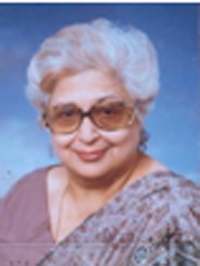
Dr Frene Noshir Ginwala was born on 25 April 1932 in Johannesburg in what was then the Province of the Transvaal (now Gauteng Province). Her politics would be influenced by where and how she grew up. Johannesburg was a growing city in the 1930s. The discovery of gold on the Witwatersrand in the late nineteenth century caused something of a boomtown that would become Johannesburg. The city was tied to the mineral revolution: its economy was centred around the mining, processing and transport of gold and this focus shaped the types of people and society that developed in Johannesburg. The gold fields of the Rand were only one part of the mineral revolution in South Africa, the other part being the diamond mines, and foreign capital poured into South Africa to develop the resources, much of it from Great Britain. Unskilled workers came from all over the country to find employment as the country moved away from agriculture towards manufacturing [1]. A hierarchy of labour soon developed. Managerial positions and skilled labour were reserved for white worker; unskilled tasks were at first open to white, African, and Coloured workers but as segregation ideology spread, unskilled labour displayed signs of the system as well. Because of the demands of the gold standard and the general commodity value of the product, the owners of the gold fields desired workers who would work most efficiently and cheaply for them.
Many African workers came to work in the gold fields from Native reserves, leaving their homes and families hundreds of miles away. This meant that cheap housing needed to be provided for them and gave the managers an effective way of controlling their work force [2]. If managers could control where their workforce lived, they could monitor their actions and better produce results. Women were thus discouraged from moving with their husbands, they remained on the land with families and Johannesburg and the surrounding areas had a disproportionately male population. Certain norms developed that were increasingly foreign from what these workers traditionally knew. On reserves, and later Bantustans, African men had at least some ability to assert their masculinity and dominance [3]. Once they left and entered the segregated urban community, their traditional roles as sons, fathers, and leaders were stripped away[4]. White managers infantilized them: they were told when to eat, when to work, when to sleep, when to relax. As an example of Africans’ subjection to inhumane abuses: workers were strip-searched to ensure that gold did not leave the premises. Pass laws controlled their movements, and the movements of the few women who followed[5]. Out of this system grew the Johannesburg into which Frene Ginwala was born. The obvious signs of segregation, oppression, and injustice would have been visible daily.
Dr. Ginwala is a second generation Indian South African. Her grandparents migrated from India to South Africa in the nineteenth century[6]. It is not known why or how her grandparents came to the country of her birth but it was likely of their own volition as those who were indentured went to Natal and were not Parsees. In 1860, a program was put into place bringing workers from the South East Asian part of the British Empire to the South African region. In Natal, wealthy white South Africans hoped to exploit the land from which they had driven Natives into profitable plantations[7]. Labour, skilled and unskilled, was needed to develop those lands for cash crops to boost the South African economy. Most Indians came to South Africa during that time as indentured workers who would eventually be freed. Slavery had been made illegal by the British Crown decades before but the promise of freedom provided a loophole. The majority of indentured Indians were Hindu and either Hindi or Tamil speaking[8]. They were settled in Natal, and once let out of their contract, they settled themselves in urban centres such as Durban. However, they were not the first Indians in littoral cities. Many traders travelled the Indian Ocean at that time and settled in South Africa in the late nineteenth century and early twentieth century. Most were Muslim. In fact, the white men assigned to procure indentured workers in India avoided bringing Muslims in later decades because plantation owners were concerned that if they ran away, they could too easily assimilate into the free Indian Muslim community[9]. Parsees, such as Dr. Ginwala’s grandparents, were a minute part of this minority population, and continue to be a minority today. In order to better construct these foreign societies, mandates dictated that thirty-five percent, and later fifty percent, of the indentured servants should be women[10]. This quota would ensure that families would create a self-sustaining labour community, and it did. In the early twentieth century, the practice of importing labourers ended. At that point the immigrant community faced a society that was becoming systematically more racially segregated, and more urbanized. Eighty percent of Indians remained in Natal[11].
The Ginwala family, as Parsees and Indians outside of Natal, would have been part of a very small community. Because Dr. Ginwala was educated in England, it is not too far of a stretch to assert that she came from a relatively affluent and cosmopolitan background. Considering she rose to prominence in the ANC at a young age, it is also not unreasonable to assert that her parents were most likely political. Ginwala would have been aware from a young age that she lived in a system where not every citizen was treated equally. By the time the Nationalist Party took control of the South African government in 1948 and officially systematized the segregation that defined the politics and society of South Africa, she was in her late teens. It is probable that she was at least informally involved in the ANC before she left for the University of London to study for her Bachelor of Laws. Johannesburg was an urban centre and political movements such as the ANC and the labour unions were growing in size and importance.
The ANC grew out of the South African Native National Congress, which was founded in 1912[12]. The political group arose out of the injustice suffered by Africans at the hand of the government in the hands of the white minority government. Educated, Christian, African men who adopted liberal doctrines comprised the majority of the early members. The party’s platform represented the preferences of that type of men: they wanted equality with white men under the current system. The ANC did not call for an overhaul of the system that led to the apartheid regime until much later. In the 1930s the ANC lost its important role as a voice for black South Africans and did not rise back onto the political scene until the 1940s when it was remodelled as a mass movement[13]. Out of this restructuring, the ANC Youth League emerged, bringing vitality and activity to the Congress. The Youth League gained control of the ANC, publishing its own platform and calling for civil disobedience and strikes in protest against the apartheid regime[14]. In the 1950s, the apartheid regime had begun to implement its segregation policies. Thousands of families of all races, though mostly African, Coloured, and Asiatics, were forced out of their homes and into areas segregated by race according to the Group Areas Act[15]. The majority of these displaced families not only lost their family homes, but also was thrown into economic hardship. An office of the apartheid regime was responsible for assigning value to the homes and, unsurprisingly, houses were valued at a much lower price than the families had paid[16]. Because, as today, most of a family’s wealth is in their house, this was devastating for most of those who were uprooted. As a response, non-white South Africans aligned towards a common goal. The Defiance Campaign began in the 1950s. Led by the ANC, people mobilized in passive resistance to pass laws, segregated facilities, the racialized legal system, and the overall racism of South African government and politics.
Although Indian South Africans were not the majority of the ANC leadership or membership, they did play a significant role. Indians were a step up from Coloureds on the racial hierarchy dictated by the apartheid government. Many elite Indians had international contacts from trading or intellectual backgrounds. Once the ANC became amenable to a mass movement rather than an African movement, Indians were well represented. Being a woman, however, presented a more significant obstacle to prominence in the ANC. As mentioned above, the ANC was designed and founded by educated, African elite men. The role of women at the conception of the group was either secretarial or supporting[17]. Women usually organized closer to home, well within the societal norms of the time in South Africa, the rest of Africa, and beyond. The control of the larger picture was ceded to men. After World War II, women took a more assertive role in all aspects of life, including political. Women demonstrated in the Free State Anti Pass Campaign and were arrested alongside men[18]. Although women were in general less educated than men, some women rose in the ranks of the ANC. When Frene Ginwala gained her L.L.B. and returned to South Africa sometime in the mid 1950s, she became one of those women. Her influence at that time was small: she did not publish any papers or attend any significant ANC meetings. She was living in Durban and was familiar with Walter Sisulu, a prominent member of the ANC Youth League and later a prominent member of Umkhonto we Sizwe (MK), the military wing of the ANC, of which Nelson Mandela was also a part. In the late 1950s and into 1960, strikes and civil disobedience escalated and caught the attention of the international community. The March 21, 1960 pass law protest in Sharpeville in what is today Gauteng Province marked a turning point in both the ANC’s tactics and Frene Ginwala’s life.
On March 21, 1960, the Pan-Africanist Congress, a sometimes rival, sometimes ally of the ANC, launched what was intended to be a series of protests against the pass laws[19]. Pass law protests were gatherings of peaceful activists at police stations, offering themselves for imprisonment for not carrying their passbooks as mandated by law. In Sharpeville, the police station was scantily manned and the crowds outside numbered in the thousands[20]. As the day wore on, the crowd became hostile and the police brought in reinforcements consisting of machine guns and airplanes. When the police attempted to arrest a leader of the protest, the situation turned violent and the police opened fire on the unarmed crowd[21]. In historical memory this marks the beginning of the end of the passive resistance to apartheid and the beginning of the militant phase. ANC leadership had most likely suspected that there would be consequences to the escalation of protest over the 1950s and were somewhat aware that the organization would be banned, or at least targeted. The media of South Africa, though controlled by the government, covered these protests and in Durban, Dr. Ginwala likely listened to coverage. That night she was contacted by Sisulu and advised to go visit her parents, who lived in Lourenco Marques, Mozambique. The next day she boarded a plane and did not re-enter the country of her birth until thirty-one years later.
Exile and Doctoral Studies
 Eric Singh interviewing Dr Frene Ginwala in 1977. Photo: Karin Singh
Frene Ginwala’s parents had left South Africa for Mozambique after she left for the University of London. Mozambique at that time was still under the colonial control of Portugal, but within months the anti-colonial guerrilla movement would begin. Ginwala was a strategic choice by the ANC to facilitate the escape of members of the ANC into exile: she had connections in East Africa and was not a publicly noticeable figure at that time. After the apartheid government declared a state of emergency, the ANC was banned and the High Command of uMkhonto we Sizwe (MK) was arrested in 1963[22]. Ginwala helped many prominent members of the ANC, who would later become leaders in the post-apartheid government, escape from South Africa after the ANC was banned. Oliver Tambo was one of the first she brought across the border into Southern Rhodesia. She later brought him, Ronald Segal, Yusuf Dadoo, and herself to Tanzania to establish the ANC in exile. Over the next few years she would assist many others including future President Nelson Mandela. Her role was not only to provide safe passage out of South Africa, but also to help these people, usually men, back into the country. It was essential for the ANC to maintain support that there were elements of the leadership within South Africa and members who were garnering support for the movement internationally. The anti-apartheid movement was dependent upon mass popular mobilization. If people of all races and genders were risking their freedom and lives to protest in the hopes of bringing down the apartheid regime, the ANC officials would not be respected if they remained on the fringe of the fight. Dr. Ginwala felt guilty for sending her friends and colleagues back into what was essentially a war-zone. She knew many would be arrested, such as Mandela in 1964, and that would affect the movement. In exile, ANC officials could work towards fostering support for the anti-apartheid movement outside of South Africa. They could use the freedom of media and travel to encourage the international community to take action against the Nationalist regime.
The most effective way to bring down the apartheid regime was to bring as much attention to it as possible. The antiapartheid leaders learned from the Civil Rights movement in America that was developing at the same time. If the public could see the atrocities, it was easier to put pressure upon the government. Ginwala founded and acted as the editor of a monthly journal, Spearhead, in Tanzania. It is unclear whether the title of this journal is a reference to Umkhonto we Sizwe, which is translated to “spear of the nation”, but it is very likely that it was. However there is no indication that Ginwala herself was involved with the militant wing of the ANC. She definitely assisted the members in leaving and re-entering South Africa, but because she was a woman and educated, she was not likely to participate. Women did take part in MK activities but in much smaller numbers than men because of their familial responsibilities and a gendered system that defined armed resistance as masculine. Furthermore, Ginwala was well educated and had the skills to become an international figure.
In the late 1960s, probably the summer of 1967, the government of Tanzania declared her a prohibited immigrant and she was deported. She had also injured her leg in some unrecorded way and took her second exile as an opportunity to go to the United Kingdom. She recuperated and gave speeches and wrote articles on the need to bring down the apartheid regime. She also gave lectures at Oxford University and began her study for a Philosophy PhD[23]. Although her studies were going well, she returned to Tanzania when President Julian Nyerere of Tanzania lifted her ban and asked Ginwala to be the managing editor of the nationalized English-language newspaper, The Standard. Ginwala accepted and established the journal as well as wrote free-lance articles on East Africa for British news sources such as The Guardian and The Economist. She also took a role as a broadcaster for BBC radio.
The apartheid government heavily monitored what could and could not be published within the country and attempted to control what left the country[24]. Due to Ginwala’s position in the ANC and her roles in assisting the escape of political refugees, she was in an especially appropriate position to spread awareness throughout the world of the violations of human rights and dignity that were being committed. The Tanzanian government was more liberal. She was permitted to criticize the country of her birth, but certain restrictions were imposed upon her. When she published an article criticizing General Mamare for executing members of the Communist Party in Sudan, she was dismissed from Spearhead and the government turned hostile towards her.
She left Tanzania once again to complete her Doctorate in Philosophy at Oxford. She continued to publish and raise awareness about the situation in South Africa while abroad. During the 1970s she travelled around the world to gain support for the antiapartheid movement and the ANC. In 1974 she returned to Mozambique and assisted in developing the ANC’s Department of Information and Publicity. Thus when, two years later, more than six hundred South Africans were killed in the Soweto Township Uprising, the ANC was able to broadcast the information abroad and correct the misinformation coming from South Africa that this was a hostile, Communist movement and the government was merely trying to protect democracy. Ginwala helped bring attention to other abuses by the South African Government: the forced resettlement of millions of black South Africans in Bantustans, the suspension of due process, and the disappearance of thousands without a trace. She became well known within international organizations for her persistent advocacy of international action. The United Nations and UNESCO in particular asked for her input and expert advice on panels. In 1972 she published a study of the press for the United Nations and in 1987 she was asked to be one of 14 international experts to advise the UNESCO Director-General on the Peace and Research Program. Her active participation in the international community indicates the faith Ginwala had in the resolution of a lifetime of resistance through multinational cooperation. In particular she was an advocate of sanctions being imposed against the Nationalist government by important allies such as the United States and Britain. Only unilateral action would have the desired effect.
Ginwala wrote several speeches and articles on the subject of sanctions. One such piece, written for the African Studies Centre at the University of Cambridge and published in 1988 is of particular note for the way it shows her growth as an advocate and writer. Her legal expertise is clear in her style. She opens with an establishment of the facts and the case against apartheid. She highlights the role of the ANC, the justice of the cause, and the ways in which the claim on the part of the international community that they do not support the apartheid regime is inaccurate because trade and non-intervention assist the apartheid regime. Each argument for sanctions is presented and defended with references to international law and the responsibility of the “democratic free world”[25]. Each argument against sanctions is presented and systematically refuted by examples of precedent or fallacies in the argument’s logic. The entire work reads like a simplified legal brief and the organization is somewhat reminiscent of the Declaration of Independence, no doubt intentional, as the United States was the international hegemonic leader and a significant trading partner for South Africa.
Her reference to the Freedom Charter of the Congress of the People and the “broad alliance” of all racial groups are particularly calculated. The international community at that point is focused upon the Cold War[26]. The Soviet Union is the major threat and although it sits with the United States and the United Kingdom on the UN Security Council, interactions were anything but secure. Focusing upon the leadership role that the ANC has played gives an indication that the international community need not entangle themselves in South Africa further than opposing the apartheid regime and establishing sanctions against it: after the nationalist government is ousted, the ANC intends to play a stabilizing part. The mention of the Charter and the alliance give an impression that the antiapartheid movement is not unstable, that it has the ability to counter the apartheid government and be effective. Furthermore, a Congress of the People gives the impression of a democratic community, which the Western democracies are more likely to support than a communist gathering. A further strike is delivered to the apartheid government with a somewhat manipulative “notwithstanding that those who took power in 1948 had been supporters of the Nazi regime”: thus she implies that if the democratic free world does not reject the apartheid government, they are supporting the same regime that so many lost their lives to defeat[27].
In the article, Ginwala uses very plain speech. Her analysis penetrates into legal history and epistemology but the language she uses is accessible to all. One particular device is to use common figures of speech for example: when discussing the need for international action, she insists that the Nationalist government “can no more change character than the leopard his spots”[28]. Her concepts are sophisticated, but her register is informal. She also uses manipulation of the font to make her point, bolding words such as “obligation” and duty” when discussing the responsibility of the international community to the people of South Africa[29]. She ends the piece by insisting in all caps upon “ACTION IN THE FORM OF SANCTIONS. NOW”[30]. This technique draws the eye to the important assertions she makes and puts emphasis upon the more sympathetic arguments for sanctions. Her main points cannot be avoided anymore than the obligation of the international community to the oppressed majority of citizens of South Africa.
Return to South Africa, Building a Nation, and Parliament
In 1989, FW de Klerk replaced PW Botha as president and began taking steps to deinstitutionalize apartheid. He implemented policies to desegregate public facilities and freed many ANC activists. In 1990 the ANC was unbanned and Nelson Mandela was released from prison. The success was due to the popular movement, international pressure, and the tireless efforts of individuals such as Frene Ginwala. The coordination of the ANC leadership in exile and within the country throughout the last three decades ensured that the political party presented a united front and was a more powerful and influential political force. There was no fracturing of the demands and the group had already established its platform and policies. When Frene Ginwala returned to South Africa in 1991 after thirty-one years away from her homeland, she took a deserved central role in shaping the transition to democracy. Having advocated for the rights of citizens of all races to have full political rights in South Africa for the majority of her life, she played an important role in assuring that sexism did not play a part in the state as well. The ANC Women’s League was relaunched on August 1990 and Frene Ginwala participated in the inaugural press conference[31]. Along with women of other political parties they wrote a Women’s National Coalition Women’s Charter and presented it in February of 1994[32]. Women had played an equal role in the popular movement. They protested, took up arms, went to jail, were murdered, and disappeared[33]. As a woman with a highly developed sense of justice and democracy, she must have felt a responsibility to ensure that these women were welcomed into the state.
In all governments around the world, even in democracies, women are underrepresented in politics and government[34]. For a demographic that makes up half of the population of any state, the most equal proportions of women in high political positions had come, during the 1990s, from establishing quotas, such as in the Nordic countries[35]. This is due to many factors: some institutional, some economic, and some psychological. In South Africa during apartheid, the ANC rejected its founding goal of races becoming equal within the established system. Over time, it became apparent that it was not just the racism of white colonialists that oppressed Africans, Coloureds, and Indians; it was the system that they had established. The system would need to be uprooted and a new one that prioritized equality of all races and peoples in order for the historically oppressed voices to be heard[36]. The same problem applied to the representation of women: a system must actively make room for women to participate. At times it seemed as if the women’s liberation movement would be abandoned by the national liberation[37]. The feminization of poverty had and has a significant impact on the number and types of women who were aware of political issues, never mind run for office and attain a seat[38]. Women, especially African and Coloured women, did not have many educational opportunities and were excluded from “masculine” work environments such as manufacturing where organization and political involvement in the form of unions often takes place[39]. As an educated and political woman, Frene Ginwala did not face these challenges, but tried to ensure that those problems would be fixed. The Women’s League failed to implement a gender quota into the Constitution or as a mandate by all political parties, but the ANC did adopt a thirty percent quota of Ministers in Parliament, which was a significant step[40]. But the deeply hierarchical, gendered society still affects which women desire to enter politics. Many still feel pressure to remain in the home and leave public life to men. And those women who did gain seats in the national legislature still faced the remnants of the old regime: they had to construct women’s bathrooms and day-care centres[41].
In April 1994, Frene Ginwala was elected to the National Assembly of South Africa as an ANC candidate in the first truly democratic elections of South Africa’s history. She was elected Speaker and began a successful decade as a prominent political figure. She continued to write and advocate for equality and democracy in South Africa, Africa and the world. True to her beliefs, she attempted to open Parliament up to all South Africans. At one point she invited Pieter Dirk Uys, dressed in drag as his character Evita, to film a segment for his show in the Parliament building. He recalled in an interview with Daniel Lieberfeld that she replied to his discomfort by saying, “I want people to know that Parliament is open to them, that it’s not a citadel on the hill for the gods to play around in. Now either I can do a documentary, which means that nobody’s going to watch it- or I bring Evita to Parliament”[42]. This anecdote illuminates not only her knowledge of the correct medium to use to reach her desired audience, but also her commitment to the transparency and representative nature of government. Throughout her parliamentary career, the ANC and the South African government continued to implement more policies that promoted gender equality. The Office of the Status of Women was established in the Deputy President’s cabinet, and many departments and local governments have followed suit[43]. Social programs devoted to women’s issues have been well run and well funded. When Dr. Ginwala stepped down in 2004, the country was markedly improved for the better.
In 2005, Dr. Ginwala became the first Chancellor of the University of KwaZulu Natal, and although the role was largely ceremonial, her commitment to education and an improved South Africa are clear in her acceptance of the role. She is now in a well-deserved semi-retirement: she still holds positions on the Board of Directors of the Inter Parliamentary Union, the Women’s League, and the ANC, and she continues to be involved in the United Nations and UNESCO in an informal capacity[44]. The apartheid regime shaped her life significantly; the blatant violations of human rights and democracy were instrumental in establishing her worldview and her commitment to equality for all races, genders, and demographics. Although it is not well documented, her early role in the ANC must have made a significant impression for her to be recruited to help establish the African National Congress in exile. Though the three decades she spent in exile after the Sharpeville Massacre were likely filled with uncertainty and instability, Frene Ginwala earned a doctorate, wrote countless articles, became a widely recognized and esteemed international figure, and played a central role in the toppling of the apartheid regime. Dr. Ginwala was influential in writing the South African Constitution and establishing a government dedicated to equality and democracy.
Footnotes
[1] Ginwala (1990) 80
[2] Kimble and Unterhalter 17
[3] Kimble and Unterhalter 17
[4] Kimble and Unterhalter 15
[5] Kimble and Unterhalter 24
[6] Ginwala (1977) 1
[7] Ginwala (1977) 4
[8] Ginwala (1977) 4
[9] Ginwala (1977) 5
[10] Ginwala (1977) 5
[11] Ginwala (1977) 7
[12] Ginwala (1990) 78
[13] Ginwala (1990) 84
[14] Ginwala (1990) 92
[15] Ginwala (1977) 12
[16] (Ginwala (1977) 13
[17] Ginwala (1990) 78
[18] Ginwala (1990) 82
[19] Tyler 5
[20] Tyler 6
[21] Tyler 5
[22] Kimble and Unterhalter 29
[23] Singh
[24] Ginwala 2006
[25] Ginwala (1988) 95
[26] Ginwala (1988) 96
[27] Ginwala (1988) 96
[28] Ginwala (1988) 101
[29] Ginwala (1988) 99, 98
[30] Ginwala (1988) 109
[31] Annecke 2
[32] Erlank 206
[33] Goetz 244
[34] Karam (1998) 3
[35] Dahlerp 93
[36] Hassim 11
[37] Erlank 197
[38] Shvedova 38
[39] off our backs
[40] Matland 65
[41] Myakyaka-Manzini 180
[42] Lieberfeld and Uys 63
[43] Erlank 210
[44] Pintat 162
This article was written by Julia Duke and forms part of the SAHO Public History Internship


