
The Mali Empire (c. 1235-1600 CE)
At its height, the Mali Empire stretched across more than 1.29 million square kilometres of West Africa, encompassing the headwaters of the Senegal and Niger rivers and controlling the most lucrative trade routes on the continent.
The Mali Empire - known in Arabic sources as Dawlat Mālī - was one of the largest, wealthiest, and most culturally sophisticated empires in medieval world history. Founded by the Mandinka warrior-king Sundiata Keita following his decisive victory over the Sosso ruler Sumanguru Kante at the Battle of Kirina around 1235 CE, the empire endured for nearly four centuries.1 It was the second largest empire in the world at its peak, surpassed in Africa only by the later Songhai Empire, and its influence shaped the political, economic, and intellectual landscape of the entire western Sudan region.2
Founding and Political Structure
The empire's origins lie in the resistance of the Mandinka (Malinke) people against Sosso dominance. According to the oral epic Sundiata, preserved by griots (hereditary oral historians called jeliw), Sundiata overcame a childhood disability to unite the twelve kingdoms of Mali and defeat Sumanguru at Kirina.3 This founding narrative was not merely legend: Arab chronicler Ibn Khaldun corroborated the empire's early consolidation in his 14th-century historical writings.4
The empire was governed through a sophisticated decentralised system. The supreme ruler, known as the Mansa (meaning "king of kings" or "emperor"), delegated authority to provincial governors called farins and kafu-tigis. A royal council composed of senior advisors, military commanders and senior clerics advised the Mansa on matters of state. This administrative structure allowed the empire to govern enormous territories across diverse ethnic and linguistic communities without constant military enforcement.5
The Niger River and Agricultural Foundations
The Niger River was not merely a geographic feature - it was the structural backbone of the Mali Empire's economy and sustenance.6 The river's inland delta, known as the Macina, created a vast floodplain of exceptional agricultural fertility. Seasonal flooding deposited rich alluvial soils that enabled intensive cultivation across the Sahel and savanna zones. The river also served as the empire's primary artery for transporting heavy trade goods - particularly gold, salt, and copper - across distances that would otherwise have been prohibitively costly overland.7
Staple crops cultivated within the empire included sorghum, millet, fonio, rice (particularly in the inland delta), beans, groundnuts, cotton, and gourds. Livestock - cattle, goats, sheep, and poultry - were raised both for domestic consumption and as trade commodities. Cotton cultivation was especially significant, underpinning a thriving textile industry that produced cloth used as a regional currency.8
Economy and Trade
The Mali Empire's extraordinary wealth was built on its commanding control of the trans-Saharan trade network. The empire sat astride two of the most valuable commodity flows in the medieval world: gold flowing northward from the Bambuk and Bure goldfields, and salt moving southward from the Saharan mines at Taghaza and Taudeni.9 Both commodities were so scarce and essential that they commanded near-equal value by weight in exchange - a fact documented by Arab traveller Ibn Battuta, who visited the empire in 1352 CE and remarked on the extraordinary organisation of its markets.10
The Mansa exercised strict fiscal sovereignty over the gold trade. All gold nuggets found within imperial territory were declared property of the crown, with only gold dust available for common trade - a policy that both concentrated wealth in the imperial treasury and helped stabilise the gold price across the region.11 As trade expanded, multiple forms of currency were adopted: gold dust measured in standard weights, salt slabs, cotton cloth, and later imported cowrie shells. The empire's markets were regulated and traders were offered imperial protection against banditry along the routes - a service for which merchants paid substantial tolls and taxes, further enriching the state.12
Mansa Musa (r. 1312-1337)
Of all the rulers of Mali, none left a more enduring mark on world history than Mansa Musa I, who came to power around 1312 CE following the mysterious disappearance of his predecessor, Abu Bakr II, on an ocean expedition into the Atlantic.13 Musa governed an empire that, by the early 14th century, encompassed the entirety of modern-day Mali, Senegal, the Gambia, Guinea-Bissau, Guinea, Ivory Coast, and parts of Mauritania, Niger, and Burkina Faso.14
Under Musa's reign the empire reached its administrative and cultural zenith. He reorganised Mali into provinces governed by appointed officials accountable to the throne, built a professional standing army, and invested heavily in Islamic scholarship and architecture. Medieval Arab scholar Al-Umari, writing in Cairo in the 1340s, described Musa as a ruler of supreme justice and extraordinary generosity, noting that the citizens of Mali were better fed and better governed than many contemporary European and Asian polities.15
The question of Musa's personal wealth has attracted significant modern speculation. While precise figures are impossible to determine across seven centuries, historians and economists have noted that Musa controlled the source of an estimated half of the world's gold supply at the time, making him almost certainly the wealthiest individual of the medieval period in real-terms resource control.16
The Pilgrimage to Mecca (1324-1325)
In 1324 CE, Mansa Musa undertook his Hajj - the Islamic pilgrimage to Mecca - an event that would introduce sub-Saharan Africa to the wider medieval world in dramatic fashion. The scale of his entourage was unprecedented: contemporary Arab accounts describe a caravan comprising approximately 60,000 men including soldiers, officials, and enslaved attendants, accompanied by 12,000 enslaved people each carrying four pounds of gold, and between 80 and 100 camels each loaded with gold dust weighing roughly 135 kilograms.17
Passing through the Mamluk Sultanate's capital of Cairo, Musa's distribution of gold gifts to officials and his purchases in local markets was so lavish that it flooded the Egyptian gold market, triggering a currency devaluation that Egyptian sources recorded as lasting between ten and twelve years - one of the most documented instances of deliberate or accidental economic disruption in the medieval period.18
The pilgrimage had profound diplomatic consequences. Musa met with the Sultan of Egypt and the Abbasid Caliph, establishing Mali as a major sovereign power in Islamic geopolitics. On his return journey, having exhausted his treasury through generosity, Musa was compelled to borrow gold at interest from Cairo merchants - a remarkable reversal that itself illustrates both the extraordinary scale of his initial spending and the functioning credit markets of the medieval Islamic world.19
The most lasting consequence of the pilgrimage was cartographic and cultural. After 1324, Mansa Musa appeared on European maps of Africa. The Catalan Atlas of 1375, produced by Abraham Cresques of Mallorca, depicted Musa seated on his throne holding a gold nugget, with a label identifying him as "the richest and most noble king of all this region."20 This image placed West Africa firmly on the mental map of medieval Europe for the first time.
The Spread of Islam and the Great Mosques
Although Islam had entered the western Sudan as early as the 9th century CE through Saharan trade contacts, Mansa Musa's reign marked a decisive turning point in its institutional entrenchment. Musa was a devout Muslim who nonetheless adhered to the tradition of his predecessors in granting religious freedom to his subjects, most of whom practised indigenous West African spiritual traditions.21 This tolerance was itself noted by Ibn Battuta as an admirable quality of Malian governance.
Returning from Mecca, Musa brought with him the Andalusian-Egyptian poet and architect Abu Ishaq al-Sahili (also known as Es-Saheli), who was commissioned to construct mosques and palaces in the Sudano-Sahelian architectural style - a tradition that blended North African and local building techniques using sun-dried mud brick (banco), timber beams, and distinctive protruding wooden spikes used both structurally and to facilitate periodic replastering.22
The three great mosques of Timbuktu - Djingareyber (c. 1327), Sankore (c. 1327-1330), and Sidi Yahia (c. 1400) - remain among the finest surviving examples of Sudano-Sahelian architecture. All three are UNESCO World Heritage Sites.23 Because the organic mud-brick construction responds to seasonal rains and drought, each mosque requires continuous communal maintenance - a practice that has kept not just the structures but the associated craft knowledge alive into the 21st century.
Timbuktu: City of Scholars
From the 14th to the 16th century, Timbuktu was among the most important intellectual centres in the world. At its height it had a population estimated at 100,000, of whom approximately 25,000 were students and scholars - a proportion comparable to the great European universities of the same era.24 The Sankore mosque, endowed by Mansa Musa, evolved into the University of Sankore, where disciplines including Islamic jurisprudence, theology, rhetoric, astronomy, mathematics, history, medicine, and geography were taught by some 180 Quranic schools under the informal confederation of scholars known as ulama.25
Did you know? After salt, books were the second-most valuable import commodity in Timbuktu - a city where intellectual prestige was inseparable from political power.
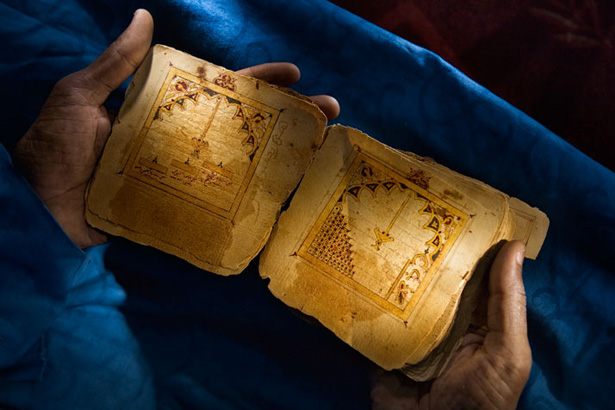
The manuscripts produced and collected in Timbuktu constitute one of the most significant documentary archives of pre-colonial African intellectual history. Estimates place the number of surviving manuscripts at between 300,000 and 700,000, covering not only religious topics but secular sciences, philosophy, history, and diplomacy - evidence that contradicts longstanding Eurocentric narratives denying Africa a written intellectual tradition.26
Today, the majority of surviving manuscripts are housed at the Ahmed Baba Institute of Higher Learning and Islamic Research (IHERI-AB) in Timbuktu, named after the prolific 16th-century Malian scholar Ahmed Baba al-Massufi al-Timbukti (1556-1627), who authored more than 40 works and whose personal library exceeded 1,600 volumes.27
In 2012, during the occupation of northern Mali by the armed group Ansar Dine, significant portions of the manuscript collection were threatened with destruction. Librarians and community members, at great personal risk, transported an estimated 370,000 manuscripts to safety in Bamako before militants set fire to the Ahmed Baba Institute, destroying some 4,000 texts that could not be removed in time.28 UNESCO had declared the heritage sites of Timbuktu - including the three great mosques and the sixteen cemeteries and mausoleums - in danger in 2012, and reconstruction work began under international supervision from 2015 onwards.29
Environmental degradation compounds the threat. Advancing desertification and deforestation across the Sahel region has diminished the moisture content of the mud-brick structures, causing cracking, erosion, and periodic collapse of walls and minarets. Annual community replastering festivals, once a reliable mechanism of maintenance, have been disrupted by conflict and displacement.30
Leo Africanus and the Documentation of the Empire
One of the most important primary sources on the Mali Empire and Timbuktu during its later period is the work of al-Hasan ibn Muhammad al-Wazzan al-Fasi, known in Europe as Leo Africanus (c. 1494-c. 1554). Born in Granada and raised in Fez, Leo travelled extensively across North and West Africa as a young diplomat and merchant before being captured by Spanish pirates and later presented to Pope Leo X in Rome, where he converted to Christianity and composed his major work.31
His Descrittione dell'Africa (Description of Africa, first published in Italian in 1550) provided European readers with the first detailed account of Timbuktu's wealth, scholarly culture, and governance. Leo described the city's abundant goods, its numerous judges and scholars, and the Songhai ruler's patronage of learning - and noted the extraordinary demand for books, which fetched higher prices than any other merchandise except salt.32 While Leo's account covers the Songhai period more than the Mali Empire proper, his documentation forms an indispensable bridge between the two empires and remains a foundational source for the history of the western Sudan.
Decline of the Mali Empire
By the late 14th century the Mali Empire had begun to fragment. A series of disputed successions weakened central authority, and provincial governors increasingly asserted independence. The Mossi kingdoms to the south raided Mali's territories, the Tuareg recaptured Timbuktu in 1433, and the rising power of the Songhai under Sunni Ali Ber decisively displaced Malian influence when Sunni Ali captured Timbuktu in 1468 and Djenné in 1473.33
Mali lingered as a reduced kingdom until approximately 1600, when it was absorbed entirely by its neighbours. Its legacy, however, was not extinguished. The administrative traditions, trade networks, legal systems, and intellectual institutions it built continued under the Songhai and later under the Moroccan Saadian dynasty after the Battle of Tondibi in 1591. The griot tradition of oral history that preserved the founding epic of Sundiata Keita survives among Mandinka communities across West Africa to this day.34
References
- Niane, D.T. 1965. Sundiata: An Epic of Old Mali. Translated by G.D. Pickett. London: Longman. pp. 1-10. ↩
- Levtzion, N. 1973. Ancient Ghana and Mali. London: Methuen. pp. 55-70. ↩
- Niane, D.T. 1965. Sundiata: An Epic of Old Mali. Translated by G.D. Pickett. London: Longman. pp. 40-82. ↩
- Ibn Khaldun. 1967. The Muqaddimah: An Introduction to History. Translated by F. Rosenthal. Princeton: Princeton University Press. Vol. 2, pp. 117-120. ↩
- Levtzion, N. 1973. Ancient Ghana and Mali. London: Methuen. pp. 80-98. ↩
- Shillington, K. 2005. History of Africa. 2nd ed. London: Palgrave Macmillan. pp. 72-78. ↩
- McIntosh, R.J. 1998. The Peoples of the Middle Niger. Oxford: Blackwell. pp. 135-150. ↩
- Levtzion, N. and Hopkins, J.F.P. (eds.). 1981. Corpus of Early Arabic Sources for West African History. Cambridge: Cambridge University Press. pp. 280-295. ↩
- Austen, R.A. 2010. Trans-Saharan Africa in World History. Oxford: Oxford University Press. pp. 40-58. ↩
- Ibn Battuta. 1929. Travels in Asia and Africa, 1325-1354. Translated by H.A.R. Gibb. London: Routledge and Kegan Paul. pp. 317-345. ↩
- Levtzion, N. 1973. Ancient Ghana and Mali. London: Methuen. pp. 112-116. ↩
- Austen, R.A. 2010. Trans-Saharan Africa in World History. Oxford: Oxford University Press. pp. 50-55. ↩
- Levtzion, N. 1973. Ancient Ghana and Mali. London: Methuen. pp. 65-68. ↩
- Niane, D.T. (ed.). 1984. Africa from the Twelfth to the Sixteenth Century. UNESCO General History of Africa, Vol. IV. London: Heinemann. pp. 117-140. ↩
- Al-Umari. In: Levtzion, N. and Hopkins, J.F.P. (eds.). 1981. Corpus of Early Arabic Sources for West African History. Cambridge: Cambridge University Press. pp. 252-278. ↩
- Conrad, D.C. 2009. Empires of Medieval West Africa: Ghana, Mali, and Songhay. New York: Chelsea House. pp. 60-65. ↩
- Al-Umari. In: Levtzion, N. and Hopkins, J.F.P. (eds.). 1981. Corpus of Early Arabic Sources for West African History. Cambridge: Cambridge University Press. pp. 261-265. ↩
- Maqrizi, A. In: Levtzion, N. and Hopkins, J.F.P. (eds.). 1981. Corpus of Early Arabic Sources for West African History. Cambridge: Cambridge University Press. pp. 349-353. ↩
- Levtzion, N. 1973. Ancient Ghana and Mali. London: Methuen. p. 68. ↩
- Cresques, A. 1375. Catalan Atlas. Bibliothèque nationale de France, Paris. Reproduced in: Harley, J.B. and Woodward, D. (eds.). 1987. The History of Cartography, Vol. 1. Chicago: University of Chicago Press. Plate 11. ↩
- Hunwick, J.O. 1999. Timbuktu and the Songhay Empire: Al-Sa'di's Ta'rikh al-Sudan down to 1613. Leiden: Brill. pp. 14-22. ↩
- Prussin, L. 1986. Hatumere: Islamic Design in West Africa. Berkeley: University of California Press. pp. 78-105. ↩
- UNESCO. 1988. Timbuktu. World Heritage List No. 119. Paris: UNESCO World Heritage Centre. Available at: https://whc.unesco.org/en/list/119 [Accessed: March 2026]. ↩
- Hunwick, J.O. 1999. Timbuktu and the Songhay Empire. Leiden: Brill. pp. 40-60. ↩
- Saad, E.N. 1983. Social History of Timbuktu: The Role of Muslim Scholars and Notables 1400-1900. Cambridge: Cambridge University Press. pp. 55-90. ↩
- Jeppie, S. and Diagne, S.B. (eds.). 2008. The Meanings of Timbuktu. Cape Town: HSRC Press. pp. 1-20. ↩
- Hunwick, J.O. and Boye, A.J. 2008. The Hidden Treasures of Timbuktu: Rediscovering Africa's Literary Culture. London: Thames and Hudson. pp. 30-42. ↩
- Hammer, J. 2016. The Bad-Ass Librarians of Timbuktu. New York: Simon and Schuster. pp. 195-240. ↩
- UNESCO. 2012. Timbuktu: Decision 36COM 7B.105. Paris: UNESCO World Heritage Committee. Available at: https://whc.unesco.org/en/decisions/4778 [Accessed: March 2026]. ↩
- Maas, P. and Mommersteeg, G. 1992. Djenné, chef-d'oeuvre architectural. Amsterdam: Royal Tropical Institute. pp. 45-60. ↩
- Zhiri, O. 1991. L'Afrique au miroir de l'Europe: fortunes de Jean Léon l'Africain à la Renaissance. Geneva: Librairie Droz. pp. 10-40. ↩
- Leo Africanus. 1896. The History and Description of Africa. Translated by John Pory (1600); edited by R. Brown. London: Hakluyt Society. Vol. III, pp. 820-829. ↩
- Hunwick, J.O. 1999. Timbuktu and the Songhay Empire. Leiden: Brill. pp. 60-80. ↩
- Niane, D.T. (ed.). 1984. Africa from the Twelfth to the Sixteenth Century. UNESCO General History of Africa, Vol. IV. London: Heinemann. pp. 195-210. ↩


