
Piet Retief completes the manifesto that sets out the reasons why the Voortrekkers are leaving the Cape Colony. It is published in English in the Graham's Town Journal on 2 February 1937. To understand the mass emigration of the Afrikaans frontier farmers (Afrikaners) out of the Cape Colony it is important to look at the circumstances in the Cape at that time.
On the one hand, there was an ongoing conflict between these farmers and the Xhosa inhabitants on the frontier, as well as growing resentment between the farmers and the British colonial authorities. The farmers argued that because the colonial government limited the activities of the Boer commandos, and refused to let them handle the law and order on the frontier themselves, they could not protect themselves from Xhosa attacks. Furthermore, they blamed the government of not giving them any financial support in the frontier wars and other confrontations with the Xhosa.
The conflict on the frontier was an indication of how important land conflict had become in the region. Both the Xhosa and Afrikaner farmers needed land to support themselves and their livestock. Land prices had also increased considerably during the 1820s and 1830s. This meant that the younger generation could not afford their own pieces of land, and this problem would only grow. Another reason for the Great Trek was a lack of labour because of the government passing the 1828 Ordinance 50, which outlawed slavery.
This Ordinance has been called 'The Magna Carta of the Khoikhoi', as it determined that the "Khoikhoi" was equal to White people and did not need to carry passes anymore. Not many of these farmers owned slaves, but some did suffer losses with the emancipation of slaves, like Trek leader Gert Maritz. For the frontier farmers, the Ordinance meant less strict control over their servants and farm labourers. It also meant that many labourers left the farms, and many of them formed moving gangs. These plundering gangs were the first grievance Retief mentioned in his manifesto.
Many farmers believed that in the country's interior, there was land in abundance (and therefore cheap land), and most importantly, no British government. Between 1834 and 1840 about 15 000 Afrikaners left the Cape Colony permanently. They called themselves 'emigrants' and their mass-trek an 'emigration', but in the late 19th century this mass-movement became known as the Great Trek and the emigrants Voortrekkers.
eventREF E-0010947Revised
22 January 1837
Piet Retief’s Great Trek manifesto is completed
- Updated
- 22 Jan 2020
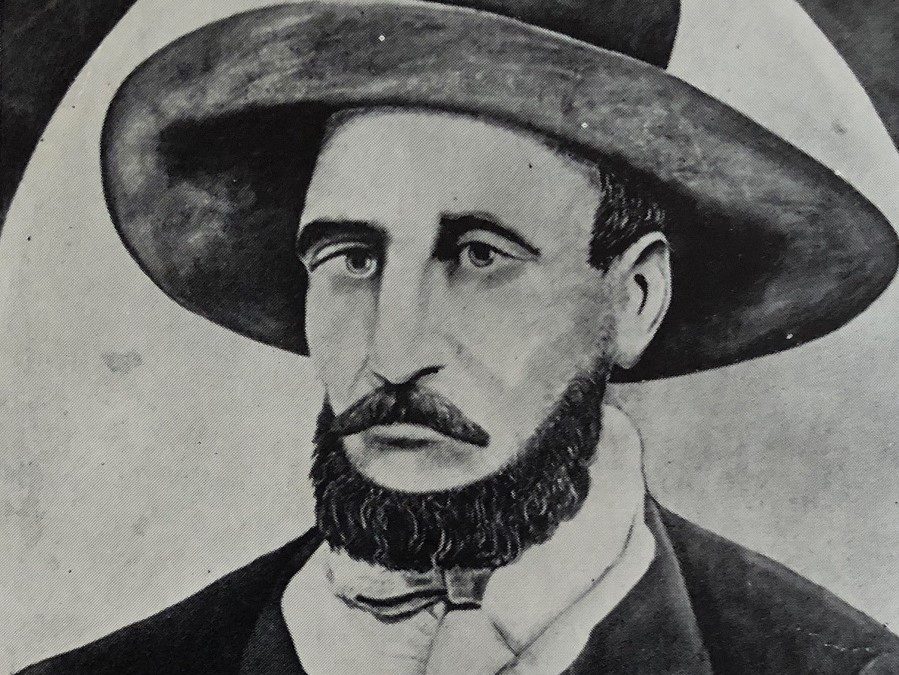
Portrait of Piet Retief
How we know this
- 01Cameron, T. & S. B. Spies (eds.) (1986). Nuwe Geskiedenis van Suid-Afrika in Woord en Beeld, Kaapstad & Pretoria: Human & Rousseau.
- 02Wallis, F. (2000). Nuusdagboek: feite en fratse oor 1000 jaar, Kaapstad: Human & Rousseau.
Last updated · 22 Jan 2020
South African History Online. (2011, March 16). Piet Retief’s Great Trek manifesto is completed. South African History Online. https://sahistory.org.za/ref/E-0010947
South African History Online (2011) 'Piet Retief’s Great Trek manifesto is completed', South African History Online, 16 March. Available at: https://sahistory.org.za/ref/E-0010947 (Accessed: 17 October 2026).
South African History Online, Piet Retief’s Great Trek manifesto is completed [website], https://sahistory.org.za/ref/E-0010947, (accessed 17 October 2026).
"Piet Retief’s Great Trek manifesto is completed." South African History Online, 16 Mar. 2011, https://sahistory.org.za/ref/E-0010947. Accessed 17 Oct. 2026.
South African History Online. "Piet Retief’s Great Trek manifesto is completed." South African History Online. March 16, 2011. https://sahistory.org.za/ref/E-0010947.
Also on 22 January
- 1874Josephine Wood, founder of the South African Library for the Blind, is born in Grahamstown
- 1936Jan Volschenk, a well-known South African painter, dies
- 1964Kenneth Kaunda becomes the Prime Minister of Northern Rhodesia (Zambia)
- 1981Percy Qoboza, editor of the Post, states that it is difficult to see how a credible newspaper for Blacks can be created in South Africa
- 1984The UDF launches the Million Signatures Campaign and by October collect just under 400 000 signatures.
- 1992Two South Africans are awarded the Unesco Peace Prize
- 1999Former Vaal policeman Gerhardus Peens admits his role in the Boipatong Massacre
- 2001South African History Online goes live
Further reading
 Biography
Piet Retief
Piet Retief was born on 12 November 1780 in the Wagenmakersvallei, (known as Wellington today), Cape Province.

 Article
Great Trek 1835-1846
The Great Trek was a movement of Dutch-speaking colonists up into the interior of southern Africa in search of land...
 Place
Place
Winburg
Winburg was founded in 1837, by Voortrekkers at the beginning of the Great Trek. It was the first town established in...
 Place
Place
Heritage Route of Transvaal, Limpopo and Mpumalanga
The Transvaal, is one of the former Province of South Africa. It occupied the North Eastern part of the Country.
 Place
Place
Mokopane- also known as Potgietersrus
Mokopane is also known as Potgietersrus. This is a Town in the Limpopo Province, of South Africa.
Search events by date
This day in history
What happened on your birthday?
SAHO is free because readers fund it. Donate →