
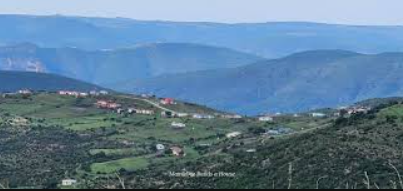
In 1865 a number of Mfengu clans were resettled in the area around Nqamakwe. As refugees from the Mfacane wars further north, they had relatively few links to their former rural tribal economy and, at a relatively early stage, came under the guidance of European missionaries. Realising the need for an education in the colonial economy they were now attempting to enter, they began, on their own initiative, to collect funds and to lay down the groundwork for the establishment of a technical training institute. or what later was a High School!
The village of Nqamakwe was established in 1876 as the seat of the new Government Agent to the amaMfengu and the High School was opened in 1877 on a site located a short distance outside Nqamakwe. The High School was named: 'Blythswood' in honour of Capt MT Blyth, the Government Agent to Fingoland. Mfengu, also called Fingo. This is where the people living in Eastern Cape province of South Africa and traditionally spoke a Xhosa language (one of the Bantu languages). The Mfengu or the descendants of refugees from the Mfecane. This was a massive migrations of Nguni peoples in Natal. This tribal migration was largely made up of people from: 'Hlubi, Bhele, and Zizi', origin. They made their way to the Eastern Cape, where they were succoured or given help by local chiefs. In the wars of 1835, 1846, and 1851–53, the Mfengu fought on the British side and were granted lands in the frontier districts of the Transkei and Ciskei, at Xhosa expense and in order to act as a buffer against further Xhosa invasions of the colony. With their social organization shattered during the Mfecane wars, the Mfengu were receptive from an early date to Christianity and Western education! As early as the 19th century many became wealthy peasant-farmers, providing some of the first Western-type political leaders! In the 20th Century, many Mfengu demanded their own Bantustan, or black state in the lands granted to them by the British in the 19th Century. These were then were incorporated into the Cape Colony in 1879.


