
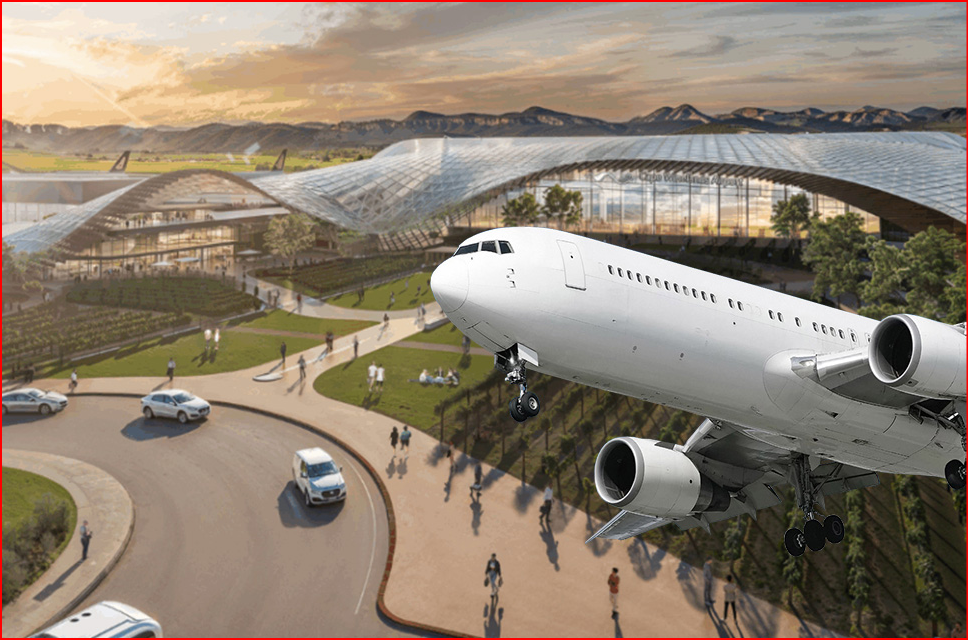
Nestled beautifully in the Western Cape winelands, Cape Winelands Airport (formerly Fisantekraal Airfield) is an ex-South African Airforce airfield now operating privately as a general flying airfield and is the preferred base for aviation training in the Cape Town Region. Of the four original runways only two remain operational, (while the other two are used as Hollywood favourites for movie and film production.)
Located on a 1.5 Kilometers Squared Area. Cape Winelands Airport, manages numerous aircraft hangars for the storage and maintenance of private aircraft and helicopters, with plenty of room for further development and providing necessary support to the primary activities or operation of an organization, system, etc.
Whether you’re looking for a picturesque alternative for private aviation transport, to learn how to fly an aircraft or simply require a base for your own private aircraft offerings, Cape Winelands Airport is perfectly situated and equipped to facilitate your needs. "The hugely anticipated “Lanseria airport” of Cape Town is well on its way to opening its doors. In 2021, IOL reported that the airport funded by South African billionaire, Rob Hersov would be named the Cape Winelands Airport, and like Johannesburg’s Lanseria airport, would serve as a similar establishment. According to Cape Winelands Airport director, Mark Wilkinson, the development plans for the Cape Winelands Airport are progressing at an exciting rate, by an incredible team of professionals. “Which include an expansion of one of the existing runways and other aeronautical facilities and infrastructure, providing much needed aviation capacity and redundancy into the region, also reducing the overall cost of flying for the public. “Airports are known to have a large catalytic multiplier effect and act as economic engines by stimulating growth, trade, investment, economic activity and most importantly job creation, and Cape Winelands Airport will be no different,” he said. Wilkinson said that the plans are extensive and very near conclusion, and was tight lipped about the finer details of the airport. “We look forward to sharing them in the future. For now, we are operating as a small general aviation airfield offering training and charter flights in the most beautiful part of the world, and a location very drivable for residents of Cape Town and the Winelands, which we see as a future growth node for the region,” he said. DA spokesperson on tourism, Manny de Freitas, said the Cape Winelands Airport, formerly known as the Fisantekraal Airfield, is 15km outside of Durbanville. “The airfield has four concrete runways, which date from around 1943, built for the use of the air force during the Second World War.
A group of investors purchased the airport in the 1990s, they want to eventually establish the Cape Winelands Airport as a full-service hub that caters for both scheduled passenger flights as well as general aviation activities, including non-scheduled flights by private plane owners,” he said. De Freitas said the airport’s appeal will be its proximity to the Cape Winelands and Franschhoek. This will have a positive impact on tourism, not only internationally but locally too. The fact that this airport is located in the North of the City (a distance from the existing airport) will add more tourism opportunities for this Area. It’s additionally exciting because this is a private venture where the economy will benefit whilst not having to spend from the national or provincial budgets,” he said. MEC for mobility in the Western Cape, Ricardo Mackenzie revealed on Twitter last month that: “The Cape Winelands Airport which includes plans for inland: 'Port, Shops and a Hotel.' This billion rand development will create more jobs in the Cape Winelands and aim to remove goods from the road,” he said."
South African construction giant chosen to build Cape Town’s new international airport

Cape Winelands Airport has selected WBHO- ( the technical development partner for Cape Winelands Airport, is a heavyweight in South Africa's construction sector and one of the country's largest publicly listed firms, with deep expertise in infrastructure, civil engineering, roads, and earthworks.) as the contracting partner for the technical development and construction of the airport. This forms part of the airport’s multibillion-rand expansion programme, with the aim of welcoming travellers in 2028. This development is expected to become the Western Cape’s next-generation aviation, hospitality and industrial hub. It is located on a 150-hectare site 13 km northeast of Durbanville, where it was built by the South African Air Force, in 1943. Previously used as a general aviation facility for flight training, the site’s owners, RSA Aero, plan to convert it into an international commercial airport, as well as a hospitality and industrial hub. On Tuesday, 9 December 2025, Cape Winelands Airport announced that WBHO has been selected as the contracting partner to bring these plans to life. Established in 1970, WBHO is one of the largest construction companies in Southern Africa and one of the biggest listed construction giants on the JSE. The company has constructed many well-known buildings in South Africa, including: Discovery’s Sandton headquarters, the PwC tower in Midrand, Mall of Africa-(The Mall of Africa is located in 'Waterfall City', Midrand, Gauteng. This is a major mixed-use development situated conveniently between Johannesburg and Pretoria, making it a significant retail and entertainment hub for the region., Greenpoint Stadium in Cape Town, and King Shaka International Airport. “With the contractor now formally on board, the project advances into a crucial new phase – detailed technical development and planning,” said Cape Winelands Airport managing director Deon Cloete. “These appointments will enable the team to begin developing the specific designs and engineering frameworks required to move the project toward construction readiness.” Cloete added that this process will also provide clearer insights into overall timelines and costs. The Cape Winelands Airport expansion, estimated to cost around R8 billion, is one of South Africa’s most significant aviation infrastructure investments. It includes the construction of a new boutique terminal, extended and realigned runway infrastructure, upgraded airside systems, enhanced cargo and logistics operations, and a modernised general aviation precinct. The airport is expected to sustain approximately 35,000 direct and indirect jobs and could sustain just over 100,000 direct and indirect jobs during its initial 20 years of operation.


