
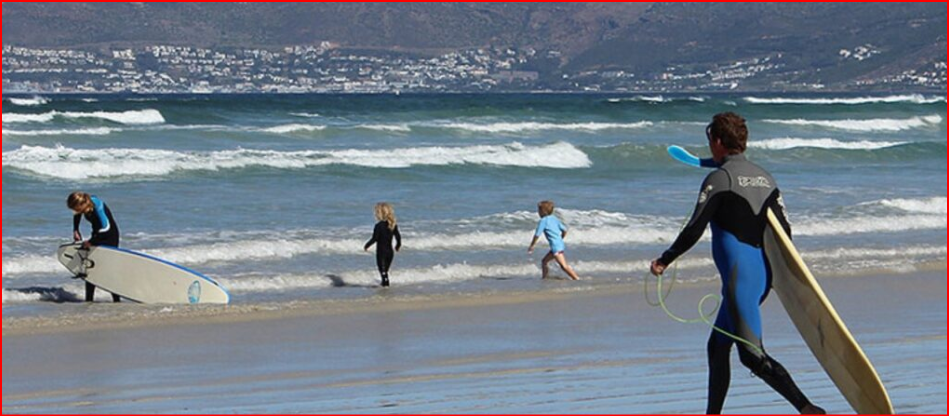
The Village of Muizenberg was established by the Dutch in 1743 as a Military Post and is located in False Bay, on the road between Cape Town and Simon's Town. It was named after Wynand Willem Muijs, Sergeant in charge of the post in 1844, and later commander of the Cape garrison. The railway line from Wynberg reached Muizenberg on 15 December 1882.
Cecil Rhodespurchased a Cottage (shown in the place image), 3 years before he died, although it might be considered as a short time – it was a notable period as Rhodes had such a short professional life of only 18-49 years! Its significance is that he died in the Cottage at his height of his career and resurgence of his political power.
In 1910, the surf craft was starting to gain popularity in Muizenberg, increasing its international surfing appeal. Muizenberg is widely considered to be the birthplace of surfing in South Africa. In 1918, the Cape Peninsula Publicity Association brochure had the following to say about the local vibe: “In the Pacific the islanders have made it an art. At the Cape it has become a cult. The wild exhilaration is infectious. It steadies the nerves, exercises the muscles and makes the enthusiast clear headed and clear eyed.” At this stage it was still all wooden belly boards, but things changed when WWI veterans returned from their travels in Hawaii and designed their own versions of the timber watertight boards they had seen on Waikiki Beach.
(LINKS IN FURTHER READING ABOUT SURFERS CORNER)
The first reported stand-up surfer was Zimbabwean-born Heather Price. Whilst holidaying in Cape Town in 1919, she reportedly borrowed a board from two American Marines. The two men had solid-wood, Hawaiian style surfboards and were kind enough to introduce Heather to stand-up wave riding. Little did Heather know, she was about to make surfing History!
"The Bergvliet Farm House is not readily visible – the owner has over the years developed a series of dense housing complex around the homestead, so it is not at all visible from a public road. If you have a friend in the appropriate place in the complex you can just see the house through the trees!"
Zandvlei Estuary is situated in Cape Town, South Africa and borders on the suburbs of: Lakeside; Marina da Gama; Muizenberg and Steenberg. The rivers and streams that feed the estuary drain the Eastern slopes of the Southern extension of the Table Mountain chain. Marina da Gama is reminiscent of a Greek Village, with its white homes and perpetually blue days, Marina da Gama is built on the Eastern banks and the waterways of the quiet Zandvlei Lake - an inland saltwater lake, connected to the sea.
Marina da Gama was built in the 1970's as an enclosed residential area close to the popular beaches of False Bay to take advantage of the wonderful setting. Lying in the suburb of greater Muizenberg, in the shadow of the Muizenberg Mountain, Marina da Gama is practically self-sufficient. There are shopping centres just across the road from the development and the beaches of Muizenberg are within walking distance - providing some of the safest bathing in Cape Town. Rather like a 'mini-Venice', it's not unknown for residents to drop in on one another by boat at the marina development.
Views from Marina da Gama are beautiful and hours can be whiled away on the vlei's banks, watching the bird life. If you must get away then there are many varied mountain walks and wildflowers to explore and the quaint little village of Kalk Bay is only a short drive away, where you can sample one of its many restaurants, trawl the antique and bookshops or buy fish at the harbour.
Cape Town's city centre is about 25 minutes' drive from Marina da Gama, or you can alternatively catch the Simonstown train line. Visiting the Cape Point Nature Reserve involves a wonderful drive along the peninsula - the wildlife and floral kingdom is worth the trip alone, and the beaches there are one of Cape Town's best kept secrets
Cape Town’s many Reserves protect and conserve our city’s natural areas and biodiversity. They are an integral part of the City’s Biodiversity Network. There are 24 nature reserves located throughout the City and GZNER is one of these. These Reserves contain some of the only remaining, natural botanical areas in the fynbos biome. The Fynbos Biome was declared a World Heritage Site in 2004. The office houses an Environmental Education Centre that offers various programs for learners. The Zandvlei Trust (ZVT) proudly helps with conservation, education and awareness projects at the Centre.
Muizenberg’s iconic beach huts, set to be relocated in March, will retain their historic design and colours as part of the central plaza upgrade.
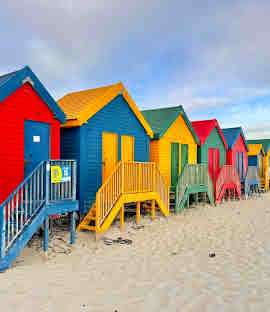
Residents can be reassured that Muizenberg’s iconic beachfront huts will retain their historic design, colours and pattern, despite being relocated as part of the Muizenberg beachfront upgrade, the city said.
The eight existing huts will be replaced with new structures that match the look and feel of those currently located next to the Waves for Change and Shark Spotters buildings.
Mayoral committee member for spatial planning and environment, Eddie Andrews, said the city is committed to preserving the heritage aesthetic that has made Muizenberg beach an internationally recognised landmark.
He said the upgrade will also improve resilience to climate change impacts and enhance public amenities for beachgoers.
He said the huts need to be set back by approximately two meters from their current location to allow for the construction of a new seawall, without reducing the width of the beach. The relocation is in response to climate change impacts, including rising sea levels and storm surges.
“Simply moving the existing huts is not feasible due to the risk of damage during dismantling, storage and reconstruction,” Andrews said.
The new huts will be installed at the central plaza, where they will also serve as a wind shelter for the central shower area.
Removal of the existing huts is expected to begin in mid-March, subject to progress on site.
Installation of the new huts will take place later in the year once construction of the promenade and central area has been completed.
Andrews confirmed that the new huts will be covered by a 12-month defects liability period once construction is completed.
During this time, the huts will be handed over to the city by the contractor and managed in line with the existing Memorandum of Agreement with the Save-the-Beach-Huts NPO. Any defects identified during this period will be investigated and addressed accordingly.
Save-the-Beach-Huts will be responsible for the ongoing management, cleaning and maintenance of the huts, as well as for repairing any damage caused by vandalism, while any design-related faults will fall under the warranty, Andrews said.
The eight original huts will be handed over to the Save-the-Beach-Huts NPO once removed and may be used as spares for maintaining huts on the eastern side of the beach or for fundraising initiatives.
Angela Gorman, chairwoman of the Beach Hut Trust, welcomed the City’s approach, saying the project strikes a careful balance between heritage preservation and long-term protection.
“The Muizenberg beach huts are an internationally recognised symbol of Cape Town, and it’s heartening to see their heritage, functionality and long-term protection being carefully balanced through this beachfront upgrade project,” she said."


